The Mistakes of World War 2 - 1941


Winston Churchill, Prime Minister of Great Britain

In 1941 the world was plunged into one of the largest wars in human history. The Axis -  Germany, Italy and later Japan were succeeding in their attacks on the Allies - Great Britain and the Soviet Union. But by 1941 the Axis had already thrown away their best chance, although a slim one, of ultimate victory. In 1940 Germany had not pressed its attacks on Britain, instead it had attacked the Soviet Union. In 1941 the Axis continued to make mistakes which caused them to loose even more chances of victory. Germany’s made the mistake of failing in their attempt to defeat Russia. But the Axis’ greatest mistake was causing the United States to join the war. That defeated their last chances for survival. When the United States declared war, the Allies had twice the men as the Axis, and more industrial capability. Forcing the USA to join the war was the greatest mistake of 1941. All the rest were minor compared to it.

Russian tanks and soldiers
To continue reading click here

Taunton Roadtrip Stop

My father, brother, and I flew up to the Taunton, Massachusetts NCFIC roadtrip stop. We left Friday morning and got back Saturday afternoon. There over 100 people there. My father gave a message titled Indispensable Center of Church and Family Life, which is glorifying God, and another message on relations within the church. On the way back we were one minute late for checking in for our flight, but we were able to get on it any way. 

Stephen waiting to board the plane

 Mr. Brown

Conference Attendees


My father speaking

Wake Forest Roadtrip Stop

Here are a few pictures that I took from the NCFIC roadtrip kickoff meeting at our church, Hope Baptist in Wake Forest. There were several hundred people there, and Mr. Brown, my father and Mr. Dohm gave messages and Mr. Breagy and other church leaders gave testimonies.

Scott Brown

Dan Horn


Steve Breagy


Memorial Day 2010

Monday our church held our annual Memorial Day picnic at Mr. Brown's farm. About 1200 people came. It was a good time of honoring the veterans and preaching the gospel. My job was to take pictures, and here are a few of the 1000 I took.

The flag flies at half staff to honor those who were killed in battle

Mr. Scott Brown

Veterans

There were rides in military vehicles

Mr. Bill Brown from our church. He was a fighter pilot in WW2, and was shot down.


Col. William Henderson, who fought on Iwo Jima, and Doug Phillips

Some of the Smith Family playing bluegrass

You can see some more here.

Battle of King's Mountain Video


Here is some video that we took when we were at King's Mountain Battlefield. Since we were in a hurry, it is not the best quality.

King's Mountain article

The Battle of King's Mountain


Prelude
The Battle of King's Mountain was fought inn South Carolina on October 8th, 1780 during the American Revolution. It is very important because it was one of the major turning points of the war. In 1779, with the British northern army holed up in New York by the American army under George Washington, the British decided to turn their focus to the Southern colonies. The British army under Cornwallis moved by sea to Charleston, and captured it and most of its garrison on May 12th, 1780 with a very low number of casualties. He then began moving north through South Carolina, destroying the remnants of the American army as he went. The British were also able to recruit over 1000 Loyalist, and they were placed under the command of Major Patrick Ferguson, a brave officer and one of the best shots in the British army. Cornwallis moved the army up to Charlotte, North Carolina. He placed Ferguson with his militia toward the west to guard his left flank.

At this point, the American army in the South was virtually non-existent. On September 10th, 1780 Ferguson issued a message where he declared to the American farmers that he would, “march his army over the mountains, hang their leaders, and lay waste to their country with fire and sword.” The men he addressed were Scotch-Irish frontiersmen, and his message had the opposite effect of what he hoped. Instead of frightening them into submission, he stirred them up to resistance. The “Over Mountain Men:” the frontiersmen from west of the Allegheny Mountains, began gathering and were joined with other groups of militia from Virginia and elsewhere. They numbered in all around 1,400 men.

When Ferguson heard of their advance, he began falling back towards Charlotte. The Patriots followed, and they heard that he made camp on King's Mountain within one day's march of Charlotte on the night of October 6th. In order to be able to attack them before they reached Charlotte, the Patriot commanders picked 900 men and rode to intercept the British. They reached King's Mountain at 3:00 PM on October 7th, 1780.

Me at the battle marker

Battle
The Patriot militia was able to surround the mountain without the Loyalists being aware of their presence. They were organized into 8 groups of 100 to 150 men. Before they went forward, Colonel Isaac Shelby gave them this order:
When we encounter the enemy, don't wait for the word of command. Let each one of you be your own officer, and do the very best you can, taking every care you can of yourselves, and availing yourselves of every advantage that chance may throw in your way. If in the woods, shelter yourselves, and give them Indian play; advance from tree to tree, pressing the enemy and killing and disabling all you can. Your officers will shrink from no danger-they will be constantly with you, and the moment the enemy give way, be on the alert, and strictly obey orders.1
With this order, the Patriots went forward with a yell. They caught the Loyalists completely by surprise, but they were able to form before they were overrun. The Patriots used the cover of trees and rocks on the mountainside, and shot down many of their opponents. Finally Ferguson ordered a bayonet charge, to drive the Patriots back. They surged forward, and drove the Patriots back, but as soon as they returned from the charge the Patriots returned again, using cover and picking off the Tories.
The slope which they charged up

Several more times the Tories charged, but the Patriots just melted back and then returned again in full strength. After an hour the Loyalists had suffered heavily. They were driven back to their camp at the top of the mountain, and their defense began to break down. The Patriots had already surrounded them, so there was no way to escape. Some of the Tories began to surrender, but Ferguson knocked down their white flags with his sword. Finally Ferguson gathered his men to try to make a last charge to attempt to break the Patriot line and escape, but as they charged the Patriots fired a volley and Ferguson fell from his horse, hit with seven bullets.
The Patriots hid behind rocks and trees

With their leader killed, the Loyalists surrendered and asked for quarter. The militia began shooting the survivors, because of what the British commander Banastre Tarleton had done to a group of defeated Patriots. But finally the officers gained control and the rest of the Tories were taken as prisoners. The battle had lasted on 65 minutes.

Where the British commander, Major Patrick Ferguson was killed
His grave marker

The Loyalists had suffered 244 killed, 163 wounded and had 668 taken prisoner. The Patriots had 29 killed and 58 wounded. Virtually none of the Tories escaped.

The Anniversary monument

Aftermath
The Battle of King's Mountain was crucial to the American cause. First of all, it gave a great boost to the American morale which had fallen greatly with the loss of South Carolina. Second it forced Cornwallis to retreat after it previously appeared that there was nothing stopping him from capturing North Carolina and Virginia. Also through this battle, the Loyalist militia was destroyed as a military force. King's Mountain was the only battle of the American War for Independence with no British troops involved. It was brothers against brothers. That is why Thomas Jefferson said that it was "The turn of the tide of success.” And Theodore Roosevelt said, "This brilliant victory marked the turning point of the American Revolution."

President Herbert Hover said,
This is a place of inspiring memories. Here less than a thousand men, inspired by the urge of freedom, defeated a superior force intrenched in this strategic position. This small band of patriots turned back a dangerous invasion well designed to separate and dismember the united Colonies. It was a little army and a little battle, but it was of mighty portent. History has done scant justice to its significance, which rightly should place it beside Lexington and Bunker Hill, Trenton and Yorktown, as one of the crucial engagements in our long struggle for independence.2


1 King's Mountain and it's Heroes: History of the Battle of King's Mountain. by Lyman C. Draper. (Cincinnati: Peter G. Thomson Publisher, 1881) Google Books. p. 196
2 http://www.presidency.ucsb.edu/ws/index.php?pid=22379


Play the video

The Mistakes of World War 2 - 1939-1940

by Joshua Horn


Last time, we examined the mistakes on the part of France and Britain which caused the Second World War. Now we will look at several mistakes which the Allies and Axis made from 1939-1940.

The Battle of France
At the beginning of the war there was what Churchill called the “Twilight War”. It was the eight months when war had been declared, but had only partially begun. During this time Germany crushed Poland and other nations while the French and British army was waiting on the border of France, building their armies and fortifying themselves. During 1939 through the spring of 1940 the German army improved in quality. They were able to hone their techniques upon the smaller nations before they attacked the stronger France. On the other hand the French army declined in quality. They waited on the border in their forts for the German attack, and their morale and discipline declined.

Mowing the lawn

Training and Admonition of the Lord Conference


This past weekend our church put on a Training and Admonition of the Lord Conference. The speakers were my father and Mr. Brown. The conference was designed specifically to help the people of our church, though others were invited.

The Lepore family from Massachusetts stayed with us for the week of the conference. We had a good time with them. I went with them to King's Mountain Battlefield on Thursday while my father was at a business meeting in Charlotte, and I will try to put up a post about that soon.

The conference started on Friday night with sessions for adults only, and the subject was chastening and the use of the rod, and religion in the home.

The conference went all day Saturday with the entire families attending. My father started with a message on Proverbs 4 speaking to the children about how they should be seeking wisdom and understanding while they are in their parents' house. The purpose of childhood is not to play, it is to have a time of learning without the responsibilities of providing for a family. Mr Brown came next with a message on Proverbs 31. He spoke on the qualifications and roles of godly women.

By this time we were already running late, so the session on preparing children for adulthood was merged with a Q and A time. After lunch, Mr Brown gave a message on how boys and girls should relate and then gave some time for questions. My father gave a message on how parents and children need to redeem the time. Last there came more time for questions.

One of the things my father mentioned in his speech on redeeming the time is that most people spend too much time and money going to collage to learn things that they will never use.

Here are some pictures that I took at the conference:


Mr. Brown speaking on Proverbs 31


My father speaking on redeeming the time


Conference Attendees


House Plan


Here is a plan of our new house that someone drew for us. Click for full size.

Deer vs. Volvo

On Friday, while driving to the 6:00 AM morning meeting at our church, a deer jumped out in front of us. My father couldn't see it until it hit us because he was driving 55 mph. He never saw the deer, but he's pretty sure it went over the car, because the headlights went out for a few seconds. We pulled over because he thought that the car would probably not run. I suggested he try to start it, and it worked. So we drove to the meeting, then afterward dropped it off at our new house, and got a ride to work from one of the men in church that lives near our new house.

We are so thankful for the Lord's protection toward us. My father said that the first year we drove to Wake Forest for the men's bible study he had to hit the brakes to miss deer very frequently, then God gave us a season of six years where we never had to hit the brakes, but we frequently saw deer standing beside the road. We are also thankful we were not in the Vitara when we hit the deer, because it probably would have gone through the windshield. Praise the Lord for His grace, mercy, and kindness!

Working on the Floors

As we have said before, we needed to re-finish the wood floors at our new house. We rented a buffer to do a screen sanding, Daddy sanded the floors, then Mommy and Rachel cleaned up. Daddy put on three coats of polyurethane on the floors. We are hoping to be moved in by Saturday, April 24. We did not sand down to the wood like we did when we refinished the floors in our current house, which you can read about here.

Rachel Sweeping the Porch

Rachel Vacuuming

Property Tax Quote

William Penn, the founder of Pennsylvania

I came across an interesting quote in a book I am reading called Albion's Seed (by David Hackett Fischer) related to an outcry against a mere penny per pound, or 4/10 of one percent, proposed tax increase in the province of Pennsylvania in 1692. What a contrast to the complacency of Americans over the conservative estimate of $3,000 of additional debt per person to pay for the recently signed ObamaCare bill, and nobody knows how much in taxes it will add. I traced the quote to this petition to the Assembly in Philadelphia about a property tax:
The thing therefore, touching which we at present give you the trouble of these Lines, is a certain Bill, promulgated for the Assessing and Leavying One penny per pound out of the supposed value of every man's estate, and two Shillings per head for those not otherwise rated, which great tax, as it will doubtless amount to a great sum of money, for which we know no present Necessity...so deep the impression it will make in our Estates, much of which...lies dead in lands, of little value or profit at present, tho' liable to be highly rated at the wills and Pleasures of the Promulgators themselves...is very grievous and greatly discouraging at to us, and as it may almost Ruin many at present...so you will find, that if you once Confirm the said Bill, it will be very Prejudicial and Detremental to the Free-men...besides also, you will find it...of dangerous consequence, and an ill president for the future, for as the people grow in wealth, and the Governours (sic) in power, so shall the tax be laid heavier. 1
1 The Pennsylvania Magazine of History and Biography, vol 38 (Philadelphia, The Historical Society of Pennsylvania, 1914) from Google Books p. 495-496

House Closing


Today we closed on our house in Youngsville, NC! We are really excited about it. We are not sure when we will be moving, but it will probably be in 2-3 weeks because we are going to put a couple of coats of polyurethane on the floors so we will not have to do that later. You can see pictures of the house here and here and we will try to put up more soon.

The Mistakes that Caused World War 2


      World War I, the bloodiest war in human history up to that time, ended in 1918. Germany and Austria had finally been driven back and defeated by the Allies (England, France, America, Russia and others.) The Allies were tired of war. Tens of thousands of British and French men had been killed for mere feet of ground. The casualties had been terrible. In England one out of every three males were casualties. The Allies believed that there would never be another World War because they had fought and won the "War to End All Wars." To make certain of that, they put stringent barriers in the Treaty of Versailles to make sure Germany would never be a threat again. Twenty years later, the same Allies were again fighting Germany. Today we will examine what mistakes that they made to cause the Second World War.


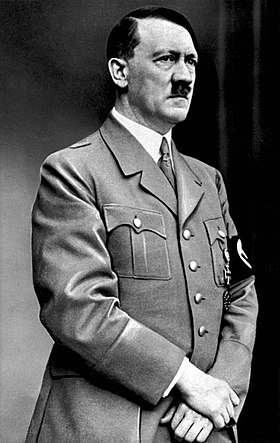
Adolf Hitler, the leader of Germany

      One of the most important mistakes that the Allies made between the World Wars was that they allowed Germany to rebuild their army. In the Treaty of Versailles, Germany was allowed only 100,000 soldiers, a 30 ship navy, no conscription (draft), no officer's school, no submarines, and no airforce. They claimed that they obeyed this requirement at the beginning, but they disobeyed it in hiding. For example, they still fostered a civilian air foce that they would be able to turn into a military one. The Allies disarmed themselves, but they allowed Germany to gradually build up their military and violate the requirements of the treaty without any punishments. Winston Churchill said, "Once Hitler's Germany had been allowed to rearm without active interference by the Allies and former associated Powers, a second World War was almost certain."1 In 1932 Germany announced that it would no longer abide by the treaty ristrictions on armaments, and much of the Allied press agreed, because they thought that it was unfair for only the Germans to be required to disarmed. In 1935 Hitler instituted compulsory military conscription, and later England agreed that Germany should be allowed to expand its navy. Up until 1934, the Allies were still strong enough that they could have avoided a war by requiring Germany to disarm, but they did not. Instead, they remained at ease while the Germans built up a military stronger than their own. Winston Churchill said, "[T]he strict enforcement at any time till 1934 of the Disarmament Clauses of the Peace Treaty would have guarded indefinitely, without violence or bloodshed, the peace and safety of mankind. "2


Hitler reviewing his troops

      The other main problem was that the Allies allowed Germany to annex and attack other nations without resisting until it was too late. In 1936 Hitler ordered the Rhineland to be occupied, which was supposed to be a demilitarized zone on the border of Germany. The Allies did nothing. In 1938-1939 Germany annexed Austria and attacked Czechoslovakia. By this time the Allies had already allowed Germany to gain an army, but it was still weaker than their own. If they had wished, they could have used their greater force to threaten Germany and avert a greater war. It should have been clear to them that although each time Hitler said that this was all the land he wanted, his desire was to conquer the world. But instead they allowed Germany's aggression and refused to stop them. But finally the English prime mister realized what was happening and declared that they would not allow Germany to take over Poland, their next target. He said,
"Is this the last attack upon a small State or is it to be followed by another? Is this in fact a step in the direction of an attempt to dominate the world by force?"3 
England promised their support to Poland if it was attacked. But they had already made their mistake, and were destined for a long war. They had refused to act when the German army was weak, and now would have to fight it when it was strong. Churchill said, "Here is a catalogue of surrenders, at first when all was easy and later when things were harder, to the ever-growing German power. But now at last was the end of British and French submission. Here was the decision at last, taken at the worst possible moment on the least satisfactory ground, which must surely lead to the slaughter of tens of millions of people."4


      These were the mistakes that the Allies made that led up to and caused the Second World War. They should be a lesson to us not to be lazy and allow things that will surely lead us into war. Churchill said,
"Still, if you will not fight for the right when you can easily win without bloodshed; if you will not fight when your victory will be sure and not too costly; you may come to the moment when you will have to fight with all the odds against you and only a precarious chance of survival. There may even be a worse case. You may have to fight when there is no hope of victory, because it is better to perish than to live as slaves."5


1 Churchill, Winston. The Second World War. (London: Cassell & Co. Ltd 1948) volume 1
2 Ibid,  p. 13
3 Ibid,  p. 270
4 Ibid,  p. 271-272
5 Ibid,  p. 272

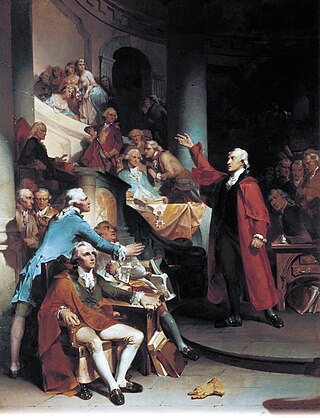
"Give me Liberty or Give me Death!" 235 years ago


235 years ago today, Patrick Henry gave his famous speech to the Virginia House of Burgesses which ended in "Give Me Liberty Or Give Me Death!" He was speaking in favor of the Virginia militia so that they could defend themselves from the tyranny of England. Here is what he said:


No man thinks more highly than I do of the patriotism, as well as abilities, of the very worthy gentlemen who have just addressed the House. But different men often see the same subject in different lights; and, therefore, I hope it will not be thought disrespectful to those gentlemen if, entertaining as I do opinions of a character very opposite to theirs, I shall speak forth my sentiments freely and without reserve. This is no time for ceremony. The question before the House is one of awful moment to this country. For my own part, I consider it as nothing less than a question of freedom or slavery; and in proportion to the magnitude of the subject ought to be the freedom of the debate. It is only in this way that we can hope to arrive at truth, and fulfill the great responsibility which we hold to God and our country. Should I keep back my opinions at such a time, through fear of giving offense, I should consider myself as guilty of treason towards my country, and of an act of disloyalty toward the Majesty of Heaven, which I revere above all earthly kings.

Mr. President, it is natural to man to indulge in the illusions of hope. We are apt to shut our eyes against a painful truth, and listen to the song of that siren till she transforms us into beasts. Is this the part of wise men, engaged in a great and arduous struggle for liberty? Are we disposed to be of the number of those who, having eyes, see not, and, having ears, hear not, the things which so nearly concern their temporal salvation? For my part, whatever anguish of spirit it may cost, I am willing to know the whole truth; to know the worst, and to provide for it.

I have but one lamp by which my feet are guided, and that is the lamp of experience. I know of no way of judging of the future but by the past. And judging by the past, I wish to know what there has been in the conduct of the British ministry for the last ten years to justify those hopes with which gentlemen have been pleased to solace themselves and the House. Is it that insidious smile with which our petition has been lately received? Trust it not, sir; it will prove a snare to your feet. Suffer not yourselves to be betrayed with a kiss. Ask yourselves how this gracious reception of our petition comports with those warlike preparations which cover our waters and darken our land. Are fleets and armies necessary to a work of love and reconciliation? Have we shown ourselves so unwilling to be reconciled that force must be called in to win back our love? Let us not deceive ourselves, sir. These are the implements of war and subjugation; the last arguments to which kings resort. I ask gentlemen, sir, what means this martial array, if its purpose be not to force us to submission? Can gentlemen assign any other possible motive for it? Has Great Britain any enemy, in this quarter of the world, to call for all this accumulation of navies and armies? No, sir, she has none. They are meant for us: they can be meant for no other. They are sent over to bind and rivet upon us those chains which the British ministry have been so long forging. And what have we to oppose to them? Shall we try argument? Sir, we have been trying that for the last ten years. Have we anything new to offer upon the subject? Nothing. We have held the subject up in every light of which it is capable; but it has been all in vain. Shall we resort to entreaty and humble supplication? What terms shall we find which have not been already exhausted? Let us not, I beseech you, sir, deceive ourselves longer. Sir, we have done everything that could be done to avert the storm which is now coming on. We have petitioned; we have remonstrated; we have supplicated; we have prostrated ourselves before the throne, and have implored its interposition to arrest the tyrannical hands of the ministry and Parliament. Our petitions have been slighted; our remonstrances have produced additional violence and insult; our supplications have been disregarded; and we have been spurned, with contempt, from the foot of the throne! In vain, after these things, may we indulge the fond hope of peace and reconciliation. There is no longer any room for hope. If we wish to be free—if we mean to preserve inviolate those inestimable privileges for which we have been so long contending—if we mean not basely to abandon the noble struggle in which we have been so long engaged, and which we have pledged ourselves never to abandon until the glorious object of our contest shall be obtained—we must fight! I repeat it, sir, we must fight! An appeal to arms and to the God of hosts is all that is left us!

They tell us, sir, that we are weak; unable to cope with so formidable an adversary. But when shall we be stronger? Will it be the next week, or the next year? Will it be when we are totally disarmed, and when a British guard shall be stationed in every house? Shall we gather strength by irresolution and inaction? Shall we acquire the means of effectual resistance by lying supinely on our backs and hugging the delusive phantom of hope, until our enemies shall have bound us hand and foot? Sir, we are not weak if we make a proper use of those means which the God of nature hath placed in our power. The millions of people, armed in the holy cause of liberty, and in such a country as that which we possess, are invincible by any force which our enemy can send against us. Besides, sir, we shall not fight our battles alone. There is a just God who presides over the destinies of nations, and who will raise up friends to fight our battles for us. The battle, sir, is not to the strong alone; it is to the vigilant, the active, the brave. Besides, sir, we have no election. If we were base enough to desire it, it is now too late to retire from the contest. There is no retreat but in submission and slavery! Our chains are forged! Their clanking may be heard on the plains of Boston! The war is inevitable—and let it come! I repeat it, sir, let it come.

It is in vain, sir, to extenuate the matter. Gentlemen may cry, Peace, Peace—but there is no peace. The war is actually begun! The next gale that sweeps from the north will bring to our ears the clash of resounding arms! Our brethren are already in the field! Why stand we here idle? What is it that gentlemen wish? What would they have? Is life so dear, or peace so sweet, as to be purchased at the price of chains and slavery? Forbid it, Almighty God! I know not what course others may take; but as for me, give me liberty or give me death!


St. John's Church in Richmond where Henry gave his speech