Showing posts with label American Revolution. Show all posts

Cowpens Battlefield


A few weeks ago we visited Cowpens Battlefield  with friends from church on our way to the Atlanta NCFIC roadtrip stop. It was one of the most important battles in South Carolina of the American War for Independence. General Daniel Morgan made a stand there against the British troops who were chasing him under the cruel British commander Tarelton. Since most of his troops were undisciplined militia, he put them out in two lines in front of the Continentals. He told them to fire just two shots and then they could run. That is just what they did, and the British became disordered in the pursuit. The Continentals retreated as well due to a misunderstood order, but as they ran they suddenly turned and opened fire on the British. Many British fell, and the militia came and surrounded them. The Americans won the day. The British suffered 300 killed and wounded, and over 700 prisoners. The Americans lost less than 150. This victory was important because it encouraged the Americans that they were able to beat the British.
The British troops charged across these fields


A Cannon at the Battlefield like the ones the British would have used


The monument at the Visitor's Center
We will try to post a video from the battlefield soon.

The Battle of King's Mountain


Prelude
The Battle of King's Mountain was fought inn South Carolina on October 8th, 1780 during the American Revolution. It is very important because it was one of the major turning points of the war. In 1779, with the British northern army holed up in New York by the American army under George Washington, the British decided to turn their focus to the Southern colonies. The British army under Cornwallis moved by sea to Charleston, and captured it and most of its garrison on May 12th, 1780 with a very low number of casualties. He then began moving north through South Carolina, destroying the remnants of the American army as he went. The British were also able to recruit over 1000 Loyalist, and they were placed under the command of Major Patrick Ferguson, a brave officer and one of the best shots in the British army. Cornwallis moved the army up to Charlotte, North Carolina. He placed Ferguson with his militia toward the west to guard his left flank.

At this point, the American army in the South was virtually non-existent. On September 10th, 1780 Ferguson issued a message where he declared to the American farmers that he would, “march his army over the mountains, hang their leaders, and lay waste to their country with fire and sword.” The men he addressed were Scotch-Irish frontiersmen, and his message had the opposite effect of what he hoped. Instead of frightening them into submission, he stirred them up to resistance. The “Over Mountain Men:” the frontiersmen from west of the Allegheny Mountains, began gathering and were joined with other groups of militia from Virginia and elsewhere. They numbered in all around 1,400 men.

When Ferguson heard of their advance, he began falling back towards Charlotte. The Patriots followed, and they heard that he made camp on King's Mountain within one day's march of Charlotte on the night of October 6th. In order to be able to attack them before they reached Charlotte, the Patriot commanders picked 900 men and rode to intercept the British. They reached King's Mountain at 3:00 PM on October 7th, 1780.

Me at the battle marker

Battle
The Patriot militia was able to surround the mountain without the Loyalists being aware of their presence. They were organized into 8 groups of 100 to 150 men. Before they went forward, Colonel Isaac Shelby gave them this order:
When we encounter the enemy, don't wait for the word of command. Let each one of you be your own officer, and do the very best you can, taking every care you can of yourselves, and availing yourselves of every advantage that chance may throw in your way. If in the woods, shelter yourselves, and give them Indian play; advance from tree to tree, pressing the enemy and killing and disabling all you can. Your officers will shrink from no danger-they will be constantly with you, and the moment the enemy give way, be on the alert, and strictly obey orders.1
With this order, the Patriots went forward with a yell. They caught the Loyalists completely by surprise, but they were able to form before they were overrun. The Patriots used the cover of trees and rocks on the mountainside, and shot down many of their opponents. Finally Ferguson ordered a bayonet charge, to drive the Patriots back. They surged forward, and drove the Patriots back, but as soon as they returned from the charge the Patriots returned again, using cover and picking off the Tories.
The slope which they charged up

Several more times the Tories charged, but the Patriots just melted back and then returned again in full strength. After an hour the Loyalists had suffered heavily. They were driven back to their camp at the top of the mountain, and their defense began to break down. The Patriots had already surrounded them, so there was no way to escape. Some of the Tories began to surrender, but Ferguson knocked down their white flags with his sword. Finally Ferguson gathered his men to try to make a last charge to attempt to break the Patriot line and escape, but as they charged the Patriots fired a volley and Ferguson fell from his horse, hit with seven bullets.
The Patriots hid behind rocks and trees

With their leader killed, the Loyalists surrendered and asked for quarter. The militia began shooting the survivors, because of what the British commander Banastre Tarleton had done to a group of defeated Patriots. But finally the officers gained control and the rest of the Tories were taken as prisoners. The battle had lasted on 65 minutes.

Where the British commander, Major Patrick Ferguson was killed
His grave marker

The Loyalists had suffered 244 killed, 163 wounded and had 668 taken prisoner. The Patriots had 29 killed and 58 wounded. Virtually none of the Tories escaped.

The Anniversary monument

Aftermath
The Battle of King's Mountain was crucial to the American cause. First of all, it gave a great boost to the American morale which had fallen greatly with the loss of South Carolina. Second it forced Cornwallis to retreat after it previously appeared that there was nothing stopping him from capturing North Carolina and Virginia. Also through this battle, the Loyalist militia was destroyed as a military force. King's Mountain was the only battle of the American War for Independence with no British troops involved. It was brothers against brothers. That is why Thomas Jefferson said that it was "The turn of the tide of success.” And Theodore Roosevelt said, "This brilliant victory marked the turning point of the American Revolution."

President Herbert Hover said,
This is a place of inspiring memories. Here less than a thousand men, inspired by the urge of freedom, defeated a superior force intrenched in this strategic position. This small band of patriots turned back a dangerous invasion well designed to separate and dismember the united Colonies. It was a little army and a little battle, but it was of mighty portent. History has done scant justice to its significance, which rightly should place it beside Lexington and Bunker Hill, Trenton and Yorktown, as one of the crucial engagements in our long struggle for independence.2


1 King's Mountain and it's Heroes: History of the Battle of King's Mountain. by Lyman C. Draper. (Cincinnati: Peter G. Thomson Publisher, 1881) Google Books. p. 196
2 http://www.presidency.ucsb.edu/ws/index.php?pid=22379


Play the video

"Give me Liberty or Give me Death!" 235 years ago


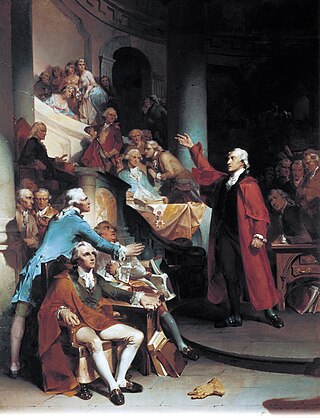
235 years ago today, Patrick Henry gave his famous speech to the Virginia House of Burgesses which ended in "Give Me Liberty Or Give Me Death!" He was speaking in favor of the Virginia militia so that they could defend themselves from the tyranny of England. Here is what he said:


No man thinks more highly than I do of the patriotism, as well as abilities, of the very worthy gentlemen who have just addressed the House. But different men often see the same subject in different lights; and, therefore, I hope it will not be thought disrespectful to those gentlemen if, entertaining as I do opinions of a character very opposite to theirs, I shall speak forth my sentiments freely and without reserve. This is no time for ceremony. The question before the House is one of awful moment to this country. For my own part, I consider it as nothing less than a question of freedom or slavery; and in proportion to the magnitude of the subject ought to be the freedom of the debate. It is only in this way that we can hope to arrive at truth, and fulfill the great responsibility which we hold to God and our country. Should I keep back my opinions at such a time, through fear of giving offense, I should consider myself as guilty of treason towards my country, and of an act of disloyalty toward the Majesty of Heaven, which I revere above all earthly kings.

Mr. President, it is natural to man to indulge in the illusions of hope. We are apt to shut our eyes against a painful truth, and listen to the song of that siren till she transforms us into beasts. Is this the part of wise men, engaged in a great and arduous struggle for liberty? Are we disposed to be of the number of those who, having eyes, see not, and, having ears, hear not, the things which so nearly concern their temporal salvation? For my part, whatever anguish of spirit it may cost, I am willing to know the whole truth; to know the worst, and to provide for it.

I have but one lamp by which my feet are guided, and that is the lamp of experience. I know of no way of judging of the future but by the past. And judging by the past, I wish to know what there has been in the conduct of the British ministry for the last ten years to justify those hopes with which gentlemen have been pleased to solace themselves and the House. Is it that insidious smile with which our petition has been lately received? Trust it not, sir; it will prove a snare to your feet. Suffer not yourselves to be betrayed with a kiss. Ask yourselves how this gracious reception of our petition comports with those warlike preparations which cover our waters and darken our land. Are fleets and armies necessary to a work of love and reconciliation? Have we shown ourselves so unwilling to be reconciled that force must be called in to win back our love? Let us not deceive ourselves, sir. These are the implements of war and subjugation; the last arguments to which kings resort. I ask gentlemen, sir, what means this martial array, if its purpose be not to force us to submission? Can gentlemen assign any other possible motive for it? Has Great Britain any enemy, in this quarter of the world, to call for all this accumulation of navies and armies? No, sir, she has none. They are meant for us: they can be meant for no other. They are sent over to bind and rivet upon us those chains which the British ministry have been so long forging. And what have we to oppose to them? Shall we try argument? Sir, we have been trying that for the last ten years. Have we anything new to offer upon the subject? Nothing. We have held the subject up in every light of which it is capable; but it has been all in vain. Shall we resort to entreaty and humble supplication? What terms shall we find which have not been already exhausted? Let us not, I beseech you, sir, deceive ourselves longer. Sir, we have done everything that could be done to avert the storm which is now coming on. We have petitioned; we have remonstrated; we have supplicated; we have prostrated ourselves before the throne, and have implored its interposition to arrest the tyrannical hands of the ministry and Parliament. Our petitions have been slighted; our remonstrances have produced additional violence and insult; our supplications have been disregarded; and we have been spurned, with contempt, from the foot of the throne! In vain, after these things, may we indulge the fond hope of peace and reconciliation. There is no longer any room for hope. If we wish to be free—if we mean to preserve inviolate those inestimable privileges for which we have been so long contending—if we mean not basely to abandon the noble struggle in which we have been so long engaged, and which we have pledged ourselves never to abandon until the glorious object of our contest shall be obtained—we must fight! I repeat it, sir, we must fight! An appeal to arms and to the God of hosts is all that is left us!

They tell us, sir, that we are weak; unable to cope with so formidable an adversary. But when shall we be stronger? Will it be the next week, or the next year? Will it be when we are totally disarmed, and when a British guard shall be stationed in every house? Shall we gather strength by irresolution and inaction? Shall we acquire the means of effectual resistance by lying supinely on our backs and hugging the delusive phantom of hope, until our enemies shall have bound us hand and foot? Sir, we are not weak if we make a proper use of those means which the God of nature hath placed in our power. The millions of people, armed in the holy cause of liberty, and in such a country as that which we possess, are invincible by any force which our enemy can send against us. Besides, sir, we shall not fight our battles alone. There is a just God who presides over the destinies of nations, and who will raise up friends to fight our battles for us. The battle, sir, is not to the strong alone; it is to the vigilant, the active, the brave. Besides, sir, we have no election. If we were base enough to desire it, it is now too late to retire from the contest. There is no retreat but in submission and slavery! Our chains are forged! Their clanking may be heard on the plains of Boston! The war is inevitable—and let it come! I repeat it, sir, let it come.

It is in vain, sir, to extenuate the matter. Gentlemen may cry, Peace, Peace—but there is no peace. The war is actually begun! The next gale that sweeps from the north will bring to our ears the clash of resounding arms! Our brethren are already in the field! Why stand we here idle? What is it that gentlemen wish? What would they have? Is life so dear, or peace so sweet, as to be purchased at the price of chains and slavery? Forbid it, Almighty God! I know not what course others may take; but as for me, give me liberty or give me death!


St. John's Church in Richmond where Henry gave his speech

The Three most Important things that Patrick Henry did for the Establishment of the United States

Click here to buy the book: The True Patrick Henry

Patrick Henry was a man who was one of the most eloquent orators at the time of the American War for Independence. In his youth, “He was 'thoughtful,' 'mild,' 'benevolent,' 'humane.'”1 When he was young he certainly was not a model for boys with his slovenly dress and slothfulness, but when he was old he was one of the fire brands in the American War for Independence. Three of the most important things he did were, his speech at the Continental Congress, his presence at the Convention, and his criticism of the Constitution of the United States.

The first of his acts that we will discuss is his celebrated speech in St. Johns Church on the 23rd of March, 1775. This is what Patrick Henry himself said about it, “My heart was hot within me, and while I was thus musing the fire kindled, and at last I spake with my tongue.”2 In this speech he explained that if the people of America did not want to be slaves they would have to fight the British and drive them out. “Is life so dear, or peace so sweet, as to be purchased at the price of chains and slavery? Forbid it Almighty God!”3 These were Patrick Henry's words about what he thought that the colonists should do. After his speech, “No applause followed. For some seconds there was silence. Henry's former opponents were dumb; and they were without the wish to be otherwise than dumb.”4 They did not have an answer for what he had said. He inspired many people with this burst of fire from his mouth. “The war is inevitable. And let it come! I repeat it, sir; let it come!”5 These were the words that he spoke about what he thought about the war. He did not think it could be avoided without going into complete slavery. He spoke about those who wanted to wait, “They tell us, sir, that we are weak—unable to cope with so formidable an adversary. But when shall we be stronger? Will it be the next week, or the next year? Will it be when we are totally disarmed, and when a British guard shall be stationed in every house? Shall we gather strength by irresolution and inaction?”6 He thought that if America was going to be a free people they had to fight then or she would never have another chance at liberty. “There is no retreat but in submission and slavery.”7 He said that the only things to do other than fighting and slavery were only illusions of hope. He said that, “I wish to know what there has been in the conduct of the British Ministry, for the last ten years, to justify those hopes with which gentlemen have been pleased to solace themselves and the House. Is it that insidious smile with which our petition has been lately received? Trust it not, sir; it will prove a snare to your feet. Suffer not yourselves to be betrayed with a kiss.”8

Another of his important contributions was his presence and his eloquence at the convention. Henry was one of the main contributors in writing the Declaration of Independence, and he was very helpful. Before the Declaration of Independence almost everyone realized the need for one, and Henry saw it too. Henry saw, “that the work of the Convention was to be constructive, and that the unity of the action was a prerequisite to success. To him the Committee of Safety was a failure. Better government was needed.”9 The man appointed to be the president of the convention was one of Henry’s enemies, and he did not fight back for this reason. He believed that the unity of the convention was more important than his beliefs. He knew that the country needed a government, and he also knew that it could not happen in disunity of the makers. “Then, in the Committee of the Whole, at Henry’s request, General Thomas Nelson introduced some ‘rough resolutions’ (still preserved, in Henry’s handwriting enjoining the Virginia delegates in Congress ‘to procure an immediate, clear, and full Declaration of Independence’”10 “‘The party of Henry’ was never better led than now. It cooperated with Pendleton in all pressing matters, and did not raise its voice for independence until the 14th of May, when the delegates were free to give the measure their full and solemn consideration.”11 He was not only helpful in the writing of the Declaration of Independence but also in the writing of the Constitution of the United States.
The next thing important Henry did was his criticism of the Constitution of the United States. “Nor should we forget that Henry’s hostility to the Federal Constitution served a beneficial purpose. It was necessary to put the new instrument through fire in order to test it and temper it. Henry certainly put it through fire. Not only that, he forced the adoption of the first ten amendments, and so, practically, was one of the great makers of the Constitution.”12 Henry was not for the Constitution, and he fought against it, but in the end he was for the Constitution, because it needed to have the dross removed. He did not want a Constitution, so he fought against it, which in the end helped what he had been fighting against. Henry, in looking at the Constitution thought that the government would swallow up all of the state’s rights, which it did at the time of the Civil War. What he feared has happened, a government which is too big. He thought that the Constitution gave the federal government too much power, so they could do anything. What Henry feared has happened, even though he thought it would come through obedience to the Constitution, but it actually came through the breaking of the Constitution.
Here we have a discussion of how his speech at the Continental Congress, his presence at the Convention, and Henry's criticism of the Constitution Of the United States are the most important things he did in his life towards the making of The United States of America. It is hard to say which is the most important of his actions because they all have good things which resulted from them. His speech could easily be said of that it was the most important because it lit up the American War for Independence. But truly, it was only a spark to what was already there. He was one of the important men of the American War for Independence for this, but he probably is not the most important. His criticism of the Constitution, and his work on the Declaration of Independence were important, but not quite as important as his speech.
1Gorge Morgan, The True Patrick Henry, 1st ed. (Virginia: American Foundation Publications) p.25
2 As quoted in Ibid, p. 189
3As quoted in Ibid, p. 191
4Ibid, p. 191
5As quoted in Ibid, p. 191
6As quoted in Ibid, p. 191
7As quoted in Ibid, p. 191
8As quoted in Ibid, p. 189-90
9Ibid, p. 257
10Ibid, p. 258
11Ibid, p. 258
12Ibid, p. 329