Property Tax Quote

William Penn, the founder of Pennsylvania

I came across an interesting quote in a book I am reading called Albion's Seed (by David Hackett Fischer) related to an outcry against a mere penny per pound, or 4/10 of one percent, proposed tax increase in the province of Pennsylvania in 1692. What a contrast to the complacency of Americans over the conservative estimate of $3,000 of additional debt per person to pay for the recently signed ObamaCare bill, and nobody knows how much in taxes it will add. I traced the quote to this petition to the Assembly in Philadelphia about a property tax:
The thing therefore, touching which we at present give you the trouble of these Lines, is a certain Bill, promulgated for the Assessing and Leavying One penny per pound out of the supposed value of every man's estate, and two Shillings per head for those not otherwise rated, which great tax, as it will doubtless amount to a great sum of money, for which we know no present Necessity...so deep the impression it will make in our Estates, much of which...lies dead in lands, of little value or profit at present, tho' liable to be highly rated at the wills and Pleasures of the Promulgators themselves...is very grievous and greatly discouraging at to us, and as it may almost Ruin many at present...so you will find, that if you once Confirm the said Bill, it will be very Prejudicial and Detremental to the Free-men...besides also, you will find it...of dangerous consequence, and an ill president for the future, for as the people grow in wealth, and the Governours (sic) in power, so shall the tax be laid heavier. 1
1 The Pennsylvania Magazine of History and Biography, vol 38 (Philadelphia, The Historical Society of Pennsylvania, 1914) from Google Books p. 495-496

House Closing


Today we closed on our house in Youngsville, NC! We are really excited about it. We are not sure when we will be moving, but it will probably be in 2-3 weeks because we are going to put a couple of coats of polyurethane on the floors so we will not have to do that later. You can see pictures of the house here and here and we will try to put up more soon.

The Mistakes that Caused World War 2


      World War I, the bloodiest war in human history up to that time, ended in 1918. Germany and Austria had finally been driven back and defeated by the Allies (England, France, America, Russia and others.) The Allies were tired of war. Tens of thousands of British and French men had been killed for mere feet of ground. The casualties had been terrible. In England one out of every three males were casualties. The Allies believed that there would never be another World War because they had fought and won the "War to End All Wars." To make certain of that, they put stringent barriers in the Treaty of Versailles to make sure Germany would never be a threat again. Twenty years later, the same Allies were again fighting Germany. Today we will examine what mistakes that they made to cause the Second World War.


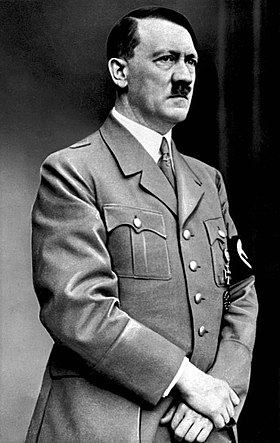
Adolf Hitler, the leader of Germany

      One of the most important mistakes that the Allies made between the World Wars was that they allowed Germany to rebuild their army. In the Treaty of Versailles, Germany was allowed only 100,000 soldiers, a 30 ship navy, no conscription (draft), no officer's school, no submarines, and no airforce. They claimed that they obeyed this requirement at the beginning, but they disobeyed it in hiding. For example, they still fostered a civilian air foce that they would be able to turn into a military one. The Allies disarmed themselves, but they allowed Germany to gradually build up their military and violate the requirements of the treaty without any punishments. Winston Churchill said, "Once Hitler's Germany had been allowed to rearm without active interference by the Allies and former associated Powers, a second World War was almost certain."1 In 1932 Germany announced that it would no longer abide by the treaty ristrictions on armaments, and much of the Allied press agreed, because they thought that it was unfair for only the Germans to be required to disarmed. In 1935 Hitler instituted compulsory military conscription, and later England agreed that Germany should be allowed to expand its navy. Up until 1934, the Allies were still strong enough that they could have avoided a war by requiring Germany to disarm, but they did not. Instead, they remained at ease while the Germans built up a military stronger than their own. Winston Churchill said, "[T]he strict enforcement at any time till 1934 of the Disarmament Clauses of the Peace Treaty would have guarded indefinitely, without violence or bloodshed, the peace and safety of mankind. "2


Hitler reviewing his troops

      The other main problem was that the Allies allowed Germany to annex and attack other nations without resisting until it was too late. In 1936 Hitler ordered the Rhineland to be occupied, which was supposed to be a demilitarized zone on the border of Germany. The Allies did nothing. In 1938-1939 Germany annexed Austria and attacked Czechoslovakia. By this time the Allies had already allowed Germany to gain an army, but it was still weaker than their own. If they had wished, they could have used their greater force to threaten Germany and avert a greater war. It should have been clear to them that although each time Hitler said that this was all the land he wanted, his desire was to conquer the world. But instead they allowed Germany's aggression and refused to stop them. But finally the English prime mister realized what was happening and declared that they would not allow Germany to take over Poland, their next target. He said,
"Is this the last attack upon a small State or is it to be followed by another? Is this in fact a step in the direction of an attempt to dominate the world by force?"3 
England promised their support to Poland if it was attacked. But they had already made their mistake, and were destined for a long war. They had refused to act when the German army was weak, and now would have to fight it when it was strong. Churchill said, "Here is a catalogue of surrenders, at first when all was easy and later when things were harder, to the ever-growing German power. But now at last was the end of British and French submission. Here was the decision at last, taken at the worst possible moment on the least satisfactory ground, which must surely lead to the slaughter of tens of millions of people."4


      These were the mistakes that the Allies made that led up to and caused the Second World War. They should be a lesson to us not to be lazy and allow things that will surely lead us into war. Churchill said,
"Still, if you will not fight for the right when you can easily win without bloodshed; if you will not fight when your victory will be sure and not too costly; you may come to the moment when you will have to fight with all the odds against you and only a precarious chance of survival. There may even be a worse case. You may have to fight when there is no hope of victory, because it is better to perish than to live as slaves."5


1 Churchill, Winston. The Second World War. (London: Cassell & Co. Ltd 1948) volume 1
2 Ibid,  p. 13
3 Ibid,  p. 270
4 Ibid,  p. 271-272
5 Ibid,  p. 272

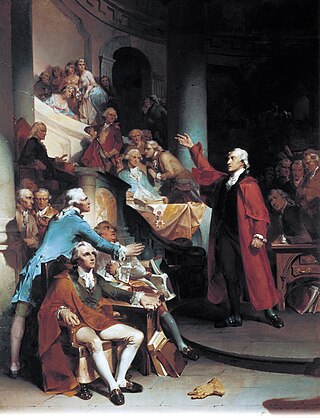
"Give me Liberty or Give me Death!" 235 years ago


235 years ago today, Patrick Henry gave his famous speech to the Virginia House of Burgesses which ended in "Give Me Liberty Or Give Me Death!" He was speaking in favor of the Virginia militia so that they could defend themselves from the tyranny of England. Here is what he said:


No man thinks more highly than I do of the patriotism, as well as abilities, of the very worthy gentlemen who have just addressed the House. But different men often see the same subject in different lights; and, therefore, I hope it will not be thought disrespectful to those gentlemen if, entertaining as I do opinions of a character very opposite to theirs, I shall speak forth my sentiments freely and without reserve. This is no time for ceremony. The question before the House is one of awful moment to this country. For my own part, I consider it as nothing less than a question of freedom or slavery; and in proportion to the magnitude of the subject ought to be the freedom of the debate. It is only in this way that we can hope to arrive at truth, and fulfill the great responsibility which we hold to God and our country. Should I keep back my opinions at such a time, through fear of giving offense, I should consider myself as guilty of treason towards my country, and of an act of disloyalty toward the Majesty of Heaven, which I revere above all earthly kings.

Mr. President, it is natural to man to indulge in the illusions of hope. We are apt to shut our eyes against a painful truth, and listen to the song of that siren till she transforms us into beasts. Is this the part of wise men, engaged in a great and arduous struggle for liberty? Are we disposed to be of the number of those who, having eyes, see not, and, having ears, hear not, the things which so nearly concern their temporal salvation? For my part, whatever anguish of spirit it may cost, I am willing to know the whole truth; to know the worst, and to provide for it.

I have but one lamp by which my feet are guided, and that is the lamp of experience. I know of no way of judging of the future but by the past. And judging by the past, I wish to know what there has been in the conduct of the British ministry for the last ten years to justify those hopes with which gentlemen have been pleased to solace themselves and the House. Is it that insidious smile with which our petition has been lately received? Trust it not, sir; it will prove a snare to your feet. Suffer not yourselves to be betrayed with a kiss. Ask yourselves how this gracious reception of our petition comports with those warlike preparations which cover our waters and darken our land. Are fleets and armies necessary to a work of love and reconciliation? Have we shown ourselves so unwilling to be reconciled that force must be called in to win back our love? Let us not deceive ourselves, sir. These are the implements of war and subjugation; the last arguments to which kings resort. I ask gentlemen, sir, what means this martial array, if its purpose be not to force us to submission? Can gentlemen assign any other possible motive for it? Has Great Britain any enemy, in this quarter of the world, to call for all this accumulation of navies and armies? No, sir, she has none. They are meant for us: they can be meant for no other. They are sent over to bind and rivet upon us those chains which the British ministry have been so long forging. And what have we to oppose to them? Shall we try argument? Sir, we have been trying that for the last ten years. Have we anything new to offer upon the subject? Nothing. We have held the subject up in every light of which it is capable; but it has been all in vain. Shall we resort to entreaty and humble supplication? What terms shall we find which have not been already exhausted? Let us not, I beseech you, sir, deceive ourselves longer. Sir, we have done everything that could be done to avert the storm which is now coming on. We have petitioned; we have remonstrated; we have supplicated; we have prostrated ourselves before the throne, and have implored its interposition to arrest the tyrannical hands of the ministry and Parliament. Our petitions have been slighted; our remonstrances have produced additional violence and insult; our supplications have been disregarded; and we have been spurned, with contempt, from the foot of the throne! In vain, after these things, may we indulge the fond hope of peace and reconciliation. There is no longer any room for hope. If we wish to be free—if we mean to preserve inviolate those inestimable privileges for which we have been so long contending—if we mean not basely to abandon the noble struggle in which we have been so long engaged, and which we have pledged ourselves never to abandon until the glorious object of our contest shall be obtained—we must fight! I repeat it, sir, we must fight! An appeal to arms and to the God of hosts is all that is left us!

They tell us, sir, that we are weak; unable to cope with so formidable an adversary. But when shall we be stronger? Will it be the next week, or the next year? Will it be when we are totally disarmed, and when a British guard shall be stationed in every house? Shall we gather strength by irresolution and inaction? Shall we acquire the means of effectual resistance by lying supinely on our backs and hugging the delusive phantom of hope, until our enemies shall have bound us hand and foot? Sir, we are not weak if we make a proper use of those means which the God of nature hath placed in our power. The millions of people, armed in the holy cause of liberty, and in such a country as that which we possess, are invincible by any force which our enemy can send against us. Besides, sir, we shall not fight our battles alone. There is a just God who presides over the destinies of nations, and who will raise up friends to fight our battles for us. The battle, sir, is not to the strong alone; it is to the vigilant, the active, the brave. Besides, sir, we have no election. If we were base enough to desire it, it is now too late to retire from the contest. There is no retreat but in submission and slavery! Our chains are forged! Their clanking may be heard on the plains of Boston! The war is inevitable—and let it come! I repeat it, sir, let it come.

It is in vain, sir, to extenuate the matter. Gentlemen may cry, Peace, Peace—but there is no peace. The war is actually begun! The next gale that sweeps from the north will bring to our ears the clash of resounding arms! Our brethren are already in the field! Why stand we here idle? What is it that gentlemen wish? What would they have? Is life so dear, or peace so sweet, as to be purchased at the price of chains and slavery? Forbid it, Almighty God! I know not what course others may take; but as for me, give me liberty or give me death!


St. John's Church in Richmond where Henry gave his speech

More Pictures of The New House!!

Things are still looking good for buying the house! The house inspection went well, they did not find very many problems, the biggest one was a noisy ceiling fan. Monday Mommy and I went over for the termite inspection, there were some termites in a palette, which will be treated and removed. We are hoping to close by the end of next week, but we won't move until we put some polyurethane on the floors. They look better than ours' now, but we will put a lot more wear on them, especially if lots of friends come to visit!

We took some pictures of the inside details:

The wall paper border in the back hall, and half-bath
(this reminds us of our friend Mrs. Tsantles)

The wall in the eat-in kitchen

The granite in the kitchen, and the paint in the eat-in kitchen
(the colors in the granite did not show up well)

The wall paper in the master bath

The wall paper in the master water closet

The curtain in the master bath
(the curtain is actually more green)

The curtain in the master bedroom

The dining room wall
(the green and yellow are actually brighter)

New House

A few weeks ago we made an offer on a house and it was accepted! It less than 15 minutes from our church and most of the families that go to it. Right now the closing is April 1st, but it still might not work out because we have to be able to find three building sites, but it is looking pretty good. You can see the MLS listing here.

Here the realtor's pictures of the house.

Bahamas

A few weeks ago my parents went on a few day cruise to the Bahamas. Here are some pictures that they took:


Part of the room


This is the Queen's staircase which led to the fort. It was built by slaves to honor Queen Victoria's help in the abolition of slavery in the Bahamas.


They visited Fort Fincastle, which was built in 1793 to protect the city.


The fort, with the ship in the background

New Template


We have just put up a new template for this blog. Tell us if you like it, and if you would like any changes in the comments.

Conference: God's Providence in the Founding of America


The church our friends the Breagy's planted, Moore Christian Assembly is doing a Conference next weekend. The speaker is Dr. Joe Morecraft, and the topic is the God's Providence in the Founding of America: The American Mind of 1776. We will be attending some of the time.

It is free, and you can read more information about it, and register here.

You can also preorder the CDs here.

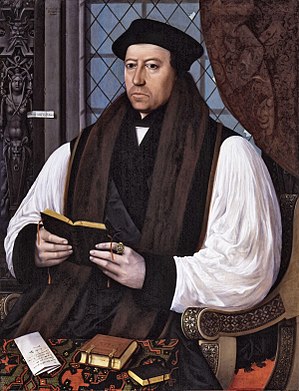
Blogging the Reformers: Thomas Cranmer


Thomas Cranmer was born in England in 1489. He attended Jesus College in Cambridge, and later taught there. He assisted King Henry VIII in 1527 to make a theological argument for why he could divorce the queen. In 1532 Henry appointed him Archbishop of Canterbury to assist him in reforming the church. The king was not a Christian, but to increase his own power he broke from the Pope and appointed himself as head of the church. At some points he would lean toward the Reformation, and at others toward the Catholics. During his 22 years as Archbishop, Cranmer worked to advance the Reformation, but he was timid and at times went along with the king against the Reformation. In 1553 he was arrested by the Catholic Queen “Bloody” Mary and was tried for heresy. He was convicted to be burnt, but eventually recanted all Lutheran doctrine and acknowledged the pope as head of the church. Instead of absolving him, Mary commanded him to be burnt anyway. Before his execution, he was given the opportunity to preach. He wrote a sermon in which he again recanted, but instead of giving the sermon he renounced the recantations and said that he would rather be burnt than recant. He was pulled from the pulpit and taken to be burnt. As he was burning, he stuck his right hand into the fire because it was the one which he used to sign the recantation. He died March 21, 1556.

D'Aubigne on Cranmer
“Cranmer moved forward slowly: he modified an evangelical movement by a clerical concession. When he had taken a step forward, he stopped suddenly, and apparently drew back; not from cowardice, but because his extreme prudence so urged him. The boldness of a Farel or a Knox is in our opinion far more noble; and yet this extreme moderation saved Cranmer and protestantism with him. ... God gives to every people and to every epoch the man necessary to it. Cranmer was this man for England, at the time of her separation from the papacy.” 1


Cranmer's Last Sermon
“And now forasmuch as I am come to the last end of my life, whereupon hangeth all my life past, and all my life to come, either to live with my master Christ for ever in joy, or else to be in pain for ever with the wicked in hell, and I see before mine eyes presently, either heaven ready to receive me, or else hell ready to swallow me up; I shall therefore declare unto you my very faith how I believe, without any color of dissimulation: for now is no time to dissemble, whatsoever I have said or written in times past.

First, I believe in God the Father Almighty, Maker of heaven and earth, etc. And I believe every article of the Catholic faith, every word and sentence taught by our Savior Jesus Christ, His apostles and prophets, in the New and Old Testament.
And now I come to the great thing which so much troubleth my conscience, more than any thing that ever I did or said in my whole life, and that is the setting abroad of a writing contrary to the truth, which now here I renounce and refuse, as things written with my hand contrary to the truth which I thought in my heart, and written for fear of death, and to save my life, if it might be; and that is, all such bills or papers which I have written or signed with my hand since my degradation, wherein I have written many things untrue. And forasmuch as my hand hath offended, writing contrary to my heart, therefore my hand shall first be punished; for when I come to the fire it shall first be burned.

And as for the pope, I refuse him as Christ's enemy, and Antichrist, with all his false doctrine."2


1 J. H. Merle D'Aubigne, History of the Reformation in Europe in the Time of Calvin (Harrisonburg, VA: Sprinkle Publications, 2000) volume 5, book viii, p. 54

2 Foxe, John Foxe's Book of Martyrs (New York: Eaton and Mains, 1911) Google Books. p. 384-385

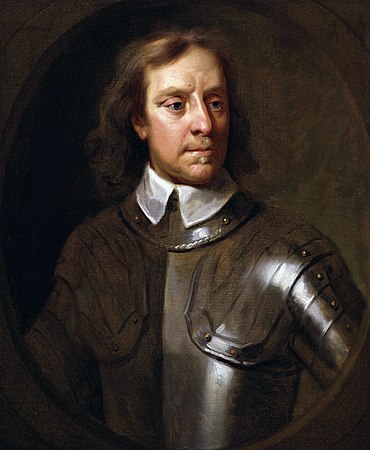
Blogging the Reformers: Oliver Cromwell

Oliver Cromwell was born in Huntingdon, England on April 25, 1599. His family was in the lower class of gentry, and he remained fairly obscure for the first part of his life. He married Elizabeth Bourchier on August 22, 1620 at 21 years of age. They had nine children. He was saved sometime later, and became a zealous Puritan. One biographer said, “He was henceforth a Christian man, not on Sundays only, but on all days, in all places, and in all cases.” Another said, “Oliver Cromwell was now a real Christian: he remained one until his last breath; and, if we except a few moments of trouble, to which the most godly men are subject, he persevered in faith and confidence till his course of mortality was completed.”

Read more here.

More Snow Pictures


Blogging the Reformers: John Alasco

John Alasco was born into one of the most influential families of Poland in 1499. At the age of 25 he was a Roman Catholic, but had heard of the Reformation and wished to examine it more fully. Therefore he traveled to Europe, and arrived in Zurich in 1525 to see Zwingli. He said to him, “Apply yourself, to the study of the sacred writings.”1 He later went to see Erasumus, and stayed in his house while he was there. Erasmus also gave him the advice to study the scriptures. Alasco therefore learned Hebrew and Greek and studied the scriptures. But when the king of Poland heard that he was with Erasmus, he ordered him to return to Poland and associate with nobility, since he was the heir to the throne. While in Poland, he was convinced to sign a document saying that he was a Catholic, but later he became a clear Protestant. He lost the kingdom and left Poland for the sake of Christianity. D'Aubigne said, “Alsco does not stand in the first rank of the men of the Reformation. But in one respect he surpassed them all ... He knew better than any one what it was to sacrifice for Jesus Christ the world...”2 He left Poland, and ministered in Friesland, the Netherlands, England and other places. He died on January 8th, 1560.

1 J. H. Merle D'Aubigne, History of the Reformation in Europe in the Time of Calvin (Harrisonburg, VA: Sprinkle Publications, 2000) volume 7, book xiii, p. 435

2 Ibid, p. 451

The Three Most Influential Changes in the British Navy From AD. 660-1815

by Stephen Horn
based on The Safeguard of the Sea and The Command of the Ocean by N.A.M. Rodgers

The seas were an influential part of the British Nation. They were used for raids and invasions by other nations, and since Britain is an island its ships were an important part of its defense system. Some of the important changes that were made to ships during AD 660-1815 were the removal of infantry from the ships, the addition of cannon, and the additions in sails and masts. All of these changed the ships and their warfare. Around 660, the ship was the Viking ship, with one mast, and oars for when there was no wind. The main way the ships fought was with the soldiers on board. Around 1815, the ships were mainly men o’ war, with three masts and many sails. The main weapon on these was their cannon, men only boarding a small minority of the time.

Read More

Snow in North Carolina

On Friday and Saturday it snowed 6 inches here! Here are some pictures:


Stephen shoveling snow

More pictures are here.

If you have not seen it yet, you can see the video we put up before of us sledding here.

New Hampshire Conference: Day 2-3

Sorry that we have not completed this post. The next day we had breakfast, and Daddy did Living the Gospel in which he said that you should live the gospel out in your life when you share it with others. Then he did Defending the Gospel. His main point was that every false argument has to contradict itself at some point. Then we had lunch and there were a few hours of free time. Daddy was preparing his next talk, and we talked to people and played broom ball on a frozen pond. Daddy's last message was Sharing the Gospel and he talked about telling people the gospel. Then after dinner we left, and Daddy, Stephen and I went to the pastor's house to spend the night, while the rest of our team went to another elder's house. The next morning we went to church, and ate lunch at one of the elder's house, then left for home. We arrived at home very early the next morning.

Blogging the Reformers: Peter Viret

Peter Viret was born in Orbe, Switzerland in 1511. At twelve years of age he went to the University of Paris to study as a Catholic. There he met William Farel, who he would later work with in Geneva. When he returned to Orbe, the city was in conflict between Roman Catholicism and the Gospel. There he was saved and preached the gospel. In 1534 he went to Geneva, and was one of the leaders of the Reformation there along with William Farel, Antonio Froment and John Calvin. He suffered persecution there from the Catholics. At one point he was badly wounded during a riot by the Catholics, and then became very ill after they convinced a woman to poison his soup. He recovered after almost dieing, but felt the effects of the poison his entire life. He became the pastor of Lausanne in 1541, and continued there for 22 years. At different times he was also a pastor at Berne, Geneva, Orbe, and other towns. One man said, “He handled the Scripture well, and he was gifted with eloquence which charmed the people.”1 He died in Switzerland in 1571.

1 J. H. Merle D'Aubigne, History of the Reformation in Europe in the Time of Calvin (Harrisonburg, VA: Sprinkle Publications, 2000) volume 7, book xi, p. 12

Sledding

It has snowed 6 inches here, and we were able to sled. Here is some video that we took:

Sledding 2010 from Joshua Horn on Vimeo.

Civil War Cavalry Skirmish

View HD here.


Here is a rough edit of some of the video from the reenactment that we went to a few months ago.

Blogging the Reformers: Baudichion de la Maisonneuve

Baudichion de la Maisonneuve was one of the leading men of Geneva in the 16th century. He was very influential in bringing the Reformation to Geneva and defending the city's liberty. He was one of the first men in Geneva to be converted to the Reformed religion. Later in the Reformation his house became one of the meeting places for the Huguenots. The Reformation in Geneva was not peaceful. Several times mobs attacked the Huguenots in Maisonneuve's house. In 1534 he was arrested in France and sentenced to be executed, but finally after the request of the town of Berne, Switzerland the king ordered him to be released and allowed him to return home. He was appointed captain-general of Geneva, and led the army to battle against their enemies. D'Aubigne said that he was “a man of noble and exalted character, bold, welcome everywhere, braving without measure all the traditions of old times, often turbulent, and the person who, more perhaps than any other, served to clear in Geneva the way by which the Reformation was to enter.”1

1 J. H. Merle D'Aubigne, History of the Reformation in Europe in the Time of Calvin (Harrisonburg, VA: Sprinkle Publications, 2000) volume 1, book I, p. 142