Showing posts with label D'Aubigne. Show all posts

Blogging the Reformers: Martin Luther


Martin Luther was born on November 10th, 1483 in Germany. His father was a miner, but he wanted Martin to be a lawyer, so he sent him to the university. But on July 2nd, 1505 as he was riding through a thunderstorm, he was scared by the lightening and thunder so he vowed that if God protected him, he would become a monk. He survived the storm and entered the monastery against his father's wishes. As a monk he worked hard to gain righteousness through good works.

Luther's German Bible
Martin Luther became a doctor at the University of Wittenberg in 1512, and he remained a doctor there for the rest of his life. He began to resist the Catholic church in the matter of indulgences. John Tetzel was traveling through Germany selling indulgences, saying that the pope would forgive your sins if you bought them. Luther disagreed, and he wrote 95 theses in Latin against them and nailed them to the church door as was customary. They were translated into German, and quickly spread all over the country. The 95 theses acknowledged the supremacy of the pope, but Luther gradually began to see that the pope was opposed to the truth of the Bible. He also began to teach justification by faith alone. The pope excommunicated Luther in January 1521 because Luther refused to recant his writings. In April he was ordered to appear before Charles the Emperor at the town of Worms to defend his beliefs. When ordered to recant his writings there, he said,
Unless I am convinced by the testimony of the Scriptures or by clear reason (for I do not trust either in the pope or in councils alone, since it is well known that they have often erred and contradicted themselves), I am bound by the Scriptures I have quoted and my conscience is captive to the Word of God. I cannot and will not recant anything, since it is neither safe nor right to go against conscience. May God help me. Amen.
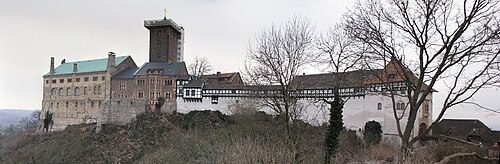
After the Diet of Worms Charles ordered that Luther be arrested. But on the way back to Wittenberg, he was captured by Fredrick the Elector and confined in Wartburg Castle to protect him from his enemies. While there he translated the New Testament into German. In 1522 he returned to Wittenberg and continued to preach and reform the church. He married Katharina von Bora after helping rescue her from a convent, and they had several children. He also finished his translation of the Old Testament into German. He died on February 18th, 1546. He had a great effect in Germany, but his writings were translated and he had a great effect wherever the Reformation penetrated.

Wartburg Castle. Source.

Blogging the Reformers: John Wickliffe

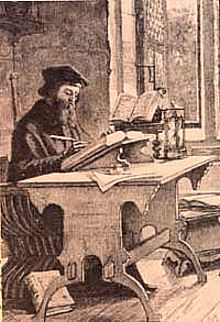
Wickliffe at work
John Wickliffe was born in 1324 in Yorkshire, England. He was saved after reading the Bible when he was frightened at the thought of death when the Black Death, which killed half the human race, arrived in London. He began to proclaim his faith to others, and he was an eloquent preacher and teacher. He became popular when he was preaching against the pope who claimed to rule England. In 1379 he became sick and four priests came to attempt to make him recant. He told them, “I shall not die, but live; and again declare the evil deeds of the friars.”1 His ministry began with attacking the pope and turned to preaching the gospel to everyone and then he permanently gave the people the word of God with his translation of the Bible. He translated it from Latin because he did not know Hebrew or Greek. It had a great effect even though it had to be copied by hand because the printing press had not yet been invented.

After translating the Bible he continued to teach the people. The church was angered because he disagreed with the doctrine transubstantiation - that Christ was killed whenever they did the mass. He was not punished because there were two people who claimed to be pope and they were too busy fighting each other. In 1384 he was paralyzed as he was administering the Lord’s Supper and he died two days later on December 31st, 1384. He was the first Reformer and a great leader of the English Reformation. D’Aubigne said, “If Luther and Calvin are the fathers of the Reformation, Wickliffe is its grandfather.”2
Wickliffe preaching
1. J. H. Merle D’Aubigne, History of the Reformation of the Sixteenth Century, (Harrisonburg, Virginia: Sprinkle Publications, 2003) vol 5, p 93
2. Ibid, p. 104

Blogging the Reformers: John Leclerc

The Cathedral in Metz. Source.

In the 16th century, one of the cities which the French Reformation began in was Meaux. John Lecelrc, a wool-carder, became the pastor there. He had learned theology through the lectures of the doctors, reading the Bible and some other books. Eventually he made some placards denouncing the pope as an Antichrist, and posted them on the cathedral. The townspeople were very angry and he was thrown into prison. He was condemned and was led through the streets to be beaten by the people. After this punishment he was released, and then he moved to Metz.

While he was in Metz he again did a brave, perhaps rash, act against the Catholics. On the night before one of the large festivals where the citizens would worship their idols, John Lecelrc when to the chapel and smashed all of the images. The next day when the worshipers arrived at the church, they found their idols broken in pieces. They ran out and found Lecelrc in the town. He admitted to breaking the idols, and told them they must worship God alone. They decided to burn him to death. They brought him to the scaffold and took heated pincers and lacerated him and pulled his nose off. As they were doing it he recited the passage that says, “Their idols are silver and gold, the work of men's hands. They have mouths, but they speak not...”1 After torturing him he was burnt with a slow fire. He was one of the first martyrs of France.

1. Psalm 115

Blogging the Reformers: Jean Merle D’Aubigné

D'Aubigne

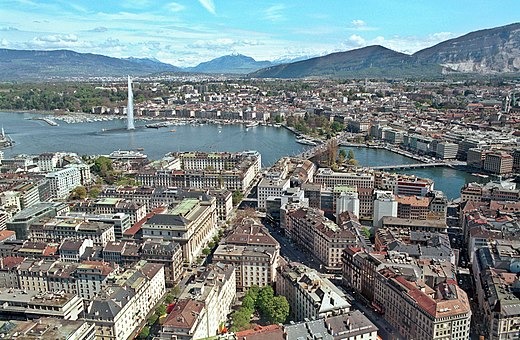
Jean-Henri Merle D'Aubigne was born on August 16th 1794. He lived in Geneva, where the great reformer John Calvin had lived 250 years before. But by the 1800s Calvin's reformation was gone and had been replaced by Unitarianism and other heresies. He was saved while studying for the ministry, and was ordained in 1817. In 1817 on the 300th of anniversary of the Reformation he visited Wartburg Castle where Martin Luther was kept. There he decided that he eventually wanted to write a history of the Reformation. He was a preacher in Hamburg and Brussels until 1831 when he returned to Geneva. There he assisted the establishment of a reformed theological seminary in Geneva. He was professor of Church History there for 41 years until his death. He was a great preacher in Geneva and was one of the leaders of the the reformation there. While he was in Geneva he wrote his two major books on the Reformation, a five volume History of the Reformation of the Sixteenth Century and an eight volume History of the Reformation in Europe in the Time of Calvin. He traveled all over Europe to study the original source documents. These books were very important in the history of the church. “For the first time, the Reformation, with all the various and boundless benefits which it has conferred upon the world, is beginning to be, in some measure, comprehended by mankind.” 1 A historian wrote that his writings “had a wider circulation, at least in the English translations, than any other book on church history.”2 D’Aubigne’s writings are still a great way to learn about church history. You can buy them here.

Geneva Today

1 J. H. Merle D'Aubigne, The Life and Writings of J. H. Merle D'Aubigne – The History of the Reformation in the Sixteenth Century (Harrisonburg, VA: Sprinkle Publications, 2001) volume 1, p. XV
2 http://www.visionforum.com/hottopics/articles/2005-04-14_001.aspx

Blogging the Reformers: John Alasco

John Alasco was born into one of the most influential families of Poland in 1499. At the age of 25 he was a Roman Catholic, but had heard of the Reformation and wished to examine it more fully. Therefore he traveled to Europe, and arrived in Zurich in 1525 to see Zwingli. He said to him, “Apply yourself, to the study of the sacred writings.”1 He later went to see Erasumus, and stayed in his house while he was there. Erasmus also gave him the advice to study the scriptures. Alasco therefore learned Hebrew and Greek and studied the scriptures. But when the king of Poland heard that he was with Erasmus, he ordered him to return to Poland and associate with nobility, since he was the heir to the throne. While in Poland, he was convinced to sign a document saying that he was a Catholic, but later he became a clear Protestant. He lost the kingdom and left Poland for the sake of Christianity. D'Aubigne said, “Alsco does not stand in the first rank of the men of the Reformation. But in one respect he surpassed them all ... He knew better than any one what it was to sacrifice for Jesus Christ the world...”2 He left Poland, and ministered in Friesland, the Netherlands, England and other places. He died on January 8th, 1560.

1 J. H. Merle D'Aubigne, History of the Reformation in Europe in the Time of Calvin (Harrisonburg, VA: Sprinkle Publications, 2000) volume 7, book xiii, p. 435

2 Ibid, p. 451

Blogging the Reformers: Baudichion de la Maisonneuve

Baudichion de la Maisonneuve was one of the leading men of Geneva in the 16th century. He was very influential in bringing the Reformation to Geneva and defending the city's liberty. He was one of the first men in Geneva to be converted to the Reformed religion. Later in the Reformation his house became one of the meeting places for the Huguenots. The Reformation in Geneva was not peaceful. Several times mobs attacked the Huguenots in Maisonneuve's house. In 1534 he was arrested in France and sentenced to be executed, but finally after the request of the town of Berne, Switzerland the king ordered him to be released and allowed him to return home. He was appointed captain-general of Geneva, and led the army to battle against their enemies. D'Aubigne said that he was “a man of noble and exalted character, bold, welcome everywhere, braving without measure all the traditions of old times, often turbulent, and the person who, more perhaps than any other, served to clear in Geneva the way by which the Reformation was to enter.”1

1 J. H. Merle D'Aubigne, History of the Reformation in Europe in the Time of Calvin (Harrisonburg, VA: Sprinkle Publications, 2000) volume 1, book I, p. 142

Blogging the Reformers: Aime Levet

Aime Levet was an apothecary in Geneva in the 16th century. When Antoine Froment first came and brought the Gospel to Geneva, Levet was against it, but eventually his heart softened. In 1533 he was won over to Christianity by his wife, and he became one of the leading Huguenots. The religious meetings were frequently held in his house. When Froment was attacked by a mob, Levet hid him in his house. A few months after Levet’s salvation the bishop of Geneva forced him and many other Huguenots to flee, but a troop of soldiers pursued and caught him. After beating him, they threw him in prison without a trial. After the overthrow of the bishop, he was released and continued to spread the Reformation. In 1536 he was elected one of the four syndics, or magistrates, of Geneva.

Blogging the Reformers - Juan Diaz

Juan Diaz was a Spaniard who went to Paris to study at the Sorbonne in 1532. He was saved by reading the scriptures in the original languages, and discussing them with James Enzinas. In 1545 he left Paris and went to Geneva. After speaking with Calvin there, he went to the Reformed churches in Germany and elsewhere. When his brother Alonzo heard that he had become a Protestant he was very angry. Though he loved his family, Alonzo would rather that they die than be a heretic. Therefore he went to Germany to attempt to convert Juan back to Catholicism, but Juan said, “I am ready to suffer anything for the sake of publicly confessing the doctrine which I have embraced.”1 Alonzo was convinced that he could not convert him back to the Roman faith, so the next morning, March 27th 1546, he went to his house with his servant early in the morning. He sent his servant into the house with a letter while he waited outside. While Juan was reading the letter, the servant crept up behind him with a hatchet and plunged it into his head. Alonzo and his servant fled as fast as they could, and Juan died an hour later. For this murder, Alonzo was raised to high honor by the Emperor Charles V.

1 As quoted in J. H. Merle D'Aubigne, History of the Reformation in Europe in the Time of Calvin (Harrisonburg, VA: Sprinkle Publications, 2000) volume 8, book XIV, p. 109

Blogging the Reformers - Hugh Latimer


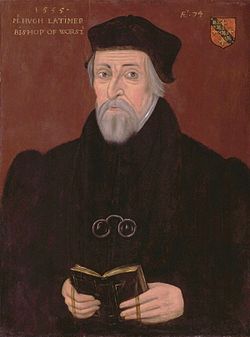
Hugh Latimer was born in a poor family in England somewhere between 1480 and 1494. He attended Cambridge University and became a priest. At some point in his life he accepted the Reformed doctrine and became one of the leaders of the movement in England. King Henry VII made him one of his chaplains. He preached boldly before the king and his court, and even rebuked the king in his sermons. He said to the king, “Would you have me preach nothing concerning a king in the king's sermon?”1 Eventually after a time there he decided to leave the court and go to his parish, which he did. He was a great preacher, a powerful orator, and he effected many people through his preaching. He was appointed bishop of Worcester by the king, but he resigned years later after he opposed the king's Catholic false doctrine. The king threw him into prison until he died, and then his son Edward released him and he continued to preach. However when Bloody Mary came to the throne, she tried him for his beliefs and he was burned on October 16th, 1555 along with two other leaders of the English Reformation, Thomas Cranmer and Nicholas Ridley. As he was about to be burnt, he said to Nicholas Ridley, “Be of good comfort, Master Ridley, and play the man; we shall this day light such a candle, by God's grace, in England, as I trust shall never be put out.”2

1 J. H. Merle D'Aubigne, History of the Reformation in Europe in the Time of Calvin (Harrisonburg, VA: Sprinkle Publications, 2000) vol. 3, book vi, p. 51
2 John Foxe. Foxe's Book of Martyrs (New York: Eaton & Mains, 1911) p. 309

Blogging the Reformers: William Farel


William Farel was born in 1489 in France. At the age of 20 he entered the Sorbonne in Paris. He became friends with Jacques Lefèvre, a Christian who desired to reform the church. He was saved in 1519, but within a year was forced to flee Paris. He preached at various cities, and then came to Geneva in 1532. He was very instrumental in the Reformation in Geneva, and many people were saved through his preaching. In 1536 he convinced John Calvin to stay and help him in Geneva rather than going into seclusion for study. He said, “May God curse your repose ! may God curse your studies, if in such a great necessity as ours you withdraw and refuse to give us help and support!”1 He was a very fiery, powerful and eloquent preacher. D'Aubigne said of him:

“His desire to enlighten his contemporaries was intense, his heart intrepid, his zeal indefatigable, and his ambition for God's glory without bounds. ... He was not a great writer ... but when he spoke he was almost without an equal. ... His much eloquence, his lively apostrophes, his bold remonstrances, his noble images, his action frank, expressive, and sometimes threatening, his voice that was often like thunder, and his fervent prayers, carried away his hearers.”2


1 J. H. Merle D'Aubigne, History of the Reformation in Europe in the Time of Calvin (Harrisonburg, VA: Sprinkle Publications, 2000) volume 3, book ix, p. 461

2 Ibid, volume 2, book v, p. 199-200

Blogging the Reformers: Pierre Olivetan


by Joshua Horn

Pierre Olivétan was born in France in 1506. He was three years older than his cousin and friend, John Calvin, the famous reformer in Geneva. He knew Latin, Greek and Hebrew. He was converted to Protestantism by Calvin. He was one of the first to bring the gospel to Geneva, and was expelled from the city along with William Feral and others. It was Feral who convinced him to translate the Bible into French. His translation was published in 1535, with a preface by Calvin. It was the first translation into French from the original languages. This translation was very influential in the Reformation. Olivétan died suddenly in 1538 at 32 years of age. Some said he died by poison, but this is probably not true. Calvin was very sad when he heard of his death. D'Aubigne said of Olivétan, “Pierre Robert Olivétan ... was gifted with a solid mind, great perseverance in the discharge of his duties, unshaken fidelity to his confections, and a holy boldness when it became necessary to combat error.” 1

1 J. H. Merle D'Aubigne, History of the Reformation in Europe in the Time of Calvin (Harrisonburg, VA: Sprinkle Publications, 2000) volume 1, book ii, p. 388

Blogging the Reformers - Patrick Hamilton


St. Andrew's Castle in Scotland, where Patrick Hamilton was kept

The Cathedral of the "Scottish Rome"

Patrick Hamilton was born in 1504 in Scotland. He was in the royal line of the kings of Scotland, and his father was one of the last great knights of the Middle Ages. When he was fourteen his father sent him to Paris to be educated. He was saved there through the beginning of the Reformation in the university at Paris, and his sadness over the death of his father in a sword battle. He returned to Scotland in 1522 after getting the Master of Arts degree. When he returned he went to the University at St. Andrew's, which was called the “Scottish Rome”. He explained and taught the Bible to those around him. He was not a great preacher such as Luther or Farel, but he knew the scriptures and could teach them ably. In 1527 he was declared a heretic by Archbishop James Beaton, and fled back to the continent. After studying the scriptures there for some time, he returned to Scotland. He began preaching to the common people in his home-country and many accepted the gospel. In 1528 he married, although he was a priest. Bishop Beaton invited him to St. Andrew's to discuss the gospel, but really he wanted to kill him. There he continued to preach, and at length the bishop summoned him before a council, which convicted him as a heretic. At noon on February 28th, 1528 he was brought out to be burned at the stake. The fire did not burn well, and there were six hours of slow torture before he died. As he was about to die, he raised his hand, off which two fingers were already burnt, as a signal that he held true to the gospel to the last. His death was the start of the Reformation in Scotland. The university and all of Scotland were inspired by his example, and he strikingly fulfilled that saying, “The blood of the martyrs is the seed of the church.” 1

Last year we visited St. Andrews on the Scotland Faith and Freedom Tour, and we saw where Patrick Hamilton was killed.

It was in front of the college where Hamilton was burned


These initials mark where he was burned


1 J. H. Merle D'Aubigne, History of the Reformation in Europe in the Time of Calvin (Harrisonburg, VA: Sprinkle Publications, 2000) volume 3, book x, p. 70

Blogging the Reformers: Aonio Paleario

Aonio Paleario

Read the introduction here.
This is from my reading in History of the Reformation in Europe in the Time of Calvin by J. H. Merle D'Aubigne

Aonio Paleario was an Italian Reformer in the 16th century. He was born in 1503. In 1520 he went to Rome to study Homer, Virgil and the like, and in 1536 he published a poem in Latin. He began reading the scriptures and discovered the doctrine of justification by faith. He married, and had two sons and two daughters. Some monks formed a plot against him to convict him of heresy, but he defended himself and was declared innocent. Thirty years later he was arrested again for heresy. He was accused of denying purgatory and for saying that Christians are justified by faith alone (Sola Fide). He was hanged and then burnt in Rome on July 3rd, 1570. Many people forget that there was a small Reformation in Italy because it died out and we do not see fruits of it today.

Blogging the Reformers: William Tyndale

William Tyndale

Read the introduction here.
This is from my reading in History of the Reformation in Europe in the Time of Calvin by J. H. Merle D'Aubigne

William Tyndale was born around 1490 in England. He was ordained as a priest in 1521. His main desire was to translate the scriptures into English. He once said when debating a clergyman, “If God preserves my life, I will cause a boy that driveth the plow to know more of the Scriptures than the pope himself.”1 The bishops in England rejected his translation because they did not want the people to be able to read the Bible. He fled to Germany and finished his translation of the New Testament there. By 1526 there were more than 20 editions of it in England. In 1535 he was betrayed in Antwerp, Belgium by someone who pretended to be a Christian. He was convicted of heresy for believing that Christians are saved by faith alone. After being defrocked from being a priest, he was martyred on October 6th, 1536 at less than 50 years of age by being strangled and then burnt. His last words were, “Lord, open the king of England's eyes!”2 Soon after these words were partially fulfilled, although Henry XIII was not saved. Soon after Tyndale's death Archbishop Cranmer presented Tyndale's translation of the Bible to Henry XIII to ask if he would allow it to be printed, though without Tyndale's name on it. King Henry agreed, and thus came the first legal Bible in English. William Tyndale had great effects on the Reformation because his translation had great influence on the English people and on the Geneva and King James Bible translations.

1 As quoted in J. H. Merle D'Aubigne, History of the Reformation in Europe in the Time of Calvin (Harrisonburg, VA: Sprinkle Publications, 2000) volume 3, book vii, p. 214
2 As quoted in Ibid, p. 225


Tyndale's Martyrdom from Foxe's book of Martyrs

Louis de Berquin


Louis de Berquin was a French reformer in the 16th century. He desired to free France from the pope. He started by accusing the divinity professors at the Sorbonne1 of heresy. When his friends thought that he was about to be arrested, they urged him to make his escape. He refused because he thought that flight would be admitting that he committed a crime.2 He was arrested in March of 1529. When one of his friends begged him to ask pardon, he said this: “Truth before all things! We must fear neither man nor torture, but render all obedience to God. I will persevere to the end; I will not pray the leader of this good war for my discharge.”3 He was strangled by order of the court April 22th, 1529.


1 University of Paris

2 As quoted in J. H. Merle D'Aubigne, History of the Reformation in Europe in the Time of Calvin (Harrisonburg, VA: Sprinkle Publications, 2000) volume 1, p. 432

3 As quoted in Ibid, volume 2, p. 40