Day 10 - Lisbon


On day 10 we docked at Lisbon, which is the capital of Portugal. When we got off the ship, we found a taxi that could take seven people. The reason that Portuguese is a lot different than Spanish is because the Portugal was settled by people from Tyre. The first stop was a palace, which was the King and Queen's vacation home when it was built. After we went through that, we stopped at another palace, which was the main palace at one time. After we had gone through that I was tired of palaces, and we went to a Moorish Castle. We had to wait for our taxi driver, because he was having lunch. All of the other taxi drivers said that he was a bad taxi driver.

The Moorish Castle was built on a steep hill, so even though the taxi took us most of the way there was still a hike up, so our Grandparents stayed behind (they had also seen it before.) The Castle was very strong, and since it was on a hill could not easily be surprised by any large number of men. This was one of the first castles that the Portuguese drove the Moors out of. It's walls were not very high from the inside but since it was on a cliff, the walls were high from the outside. After we went through the castle we asked the driver to take us to a place where we could go shopping. He did, and we looked around there for about ten or twenty minutes. After that we came back to the cruise ship. In the port, the taxi driver showed us some monuments at which he stopped to let us take pictures. When we got back to the ship, and Daddy was paying the taxi driver, the taxi driver hid one of the bills and pretended like Daddy had not given him enough. Daddy had seen him do it so he did not give him another one. Here are some pictures:
An aqueduct built in the 18-century that the driver said the Romans built (but they did not)


Looking down the wall (you can see the ocean far out there)


Me standing next to the wall


The Castle from the bottom of the hill


The steep castle wall


Daddy talking about the castle


The Castle walls from inside the Castle


One of the Bastions

Some of the ramparts

Day 9 - Cadiz


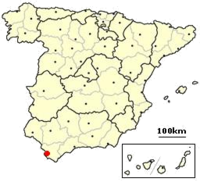
During the night we passed through the Strait of Gibralter. The Strait of Gibralter is a very narrow point between Africa and Spain. We got up at midnight to see if we could see Gibralter. We couldn't, although we saw lights near it and also Africa.


In the morning we got up and went ashore in Cadiz. We wanted to drive to Gibralter, but no car rental places were open because it was Sunday. Daddy did a talk on the Battle of Trafalgar, which was a very important sea battle between the Spanish and French and the English which happened near Gibralter. The Spanish and French fleet came out of Cadiz. We videoed it, and we may put up a clip of it soon.

After that we did a walking tour around the walls and forts of the city. Many of the fortifications were built because Sir Francis Drake of England attacked Spain and burned several cities. After walking around and seeing interesting things we went back to the ship.


Blogging the Reformers - Patrick Hamilton


St. Andrew's Castle in Scotland, where Patrick Hamilton was kept

The Cathedral of the "Scottish Rome"

Patrick Hamilton was born in 1504 in Scotland. He was in the royal line of the kings of Scotland, and his father was one of the last great knights of the Middle Ages. When he was fourteen his father sent him to Paris to be educated. He was saved there through the beginning of the Reformation in the university at Paris, and his sadness over the death of his father in a sword battle. He returned to Scotland in 1522 after getting the Master of Arts degree. When he returned he went to the University at St. Andrew's, which was called the “Scottish Rome”. He explained and taught the Bible to those around him. He was not a great preacher such as Luther or Farel, but he knew the scriptures and could teach them ably. In 1527 he was declared a heretic by Archbishop James Beaton, and fled back to the continent. After studying the scriptures there for some time, he returned to Scotland. He began preaching to the common people in his home-country and many accepted the gospel. In 1528 he married, although he was a priest. Bishop Beaton invited him to St. Andrew's to discuss the gospel, but really he wanted to kill him. There he continued to preach, and at length the bishop summoned him before a council, which convicted him as a heretic. At noon on February 28th, 1528 he was brought out to be burned at the stake. The fire did not burn well, and there were six hours of slow torture before he died. As he was about to die, he raised his hand, off which two fingers were already burnt, as a signal that he held true to the gospel to the last. His death was the start of the Reformation in Scotland. The university and all of Scotland were inspired by his example, and he strikingly fulfilled that saying, “The blood of the martyrs is the seed of the church.” 1

Last year we visited St. Andrews on the Scotland Faith and Freedom Tour, and we saw where Patrick Hamilton was killed.

It was in front of the college where Hamilton was burned


These initials mark where he was burned


1 J. H. Merle D'Aubigne, History of the Reformation in Europe in the Time of Calvin (Harrisonburg, VA: Sprinkle Publications, 2000) volume 3, book x, p. 70

Day 8 - Malaga


Our next port was Malaga, Spain. When we got off the ship, we saw that there was about a mile walk along the dock to shore. There were no car rentals at the cruise ship, so Daddy and Grandpa took a taxi to the train station while the rest of us waited at the dock. After awhile they came back with a car, and we left. We wanted to go to Alhambra, which was a castle and palace of the Moors. As we began driving we took the wrong road, because our GPS was in walking mode and would not let us get on a freeway. The road we were on was through the mountains and was very windy. Here are some pictures of the mountains:


Finally we arrived at Alhambra, which is in the town of Granada. Alhambra was a castle that was built by the Muslims (Moors) when they were ruling Spain. It was captured by the Spanish in 1492 by King Ferdinand and Queen Isabella. It is where Columbus went to ask permission and funding to come to the New World. When he came up to the castle, he said that he saw the Moorish king leaving and the Spanish flag go up the pole. We could not go in the palace because they only let a certain number of people in a day (mostly tour groups), but we walked around the gardens and castle. They would not let you walk on most of the walls and towers, but you could on some. There were good views of the town from the walls.


Part of the gardens


The castle. The little walls were houses added later.


Stephen and I with a cannon

Here are two panoramas that I took here. You can click to enlarge.


After the castle, we drove back to Malaga, but this time we took the highway, which was much quicker and straighter, though a little less scenic.

Day 7 - At Sea

On the day at sea, we mostly played Empire Builder (this is not the same edition). We don't get to play it much because it usually takes at least 4 hours to play, and we don't play games much at home.


The game board

This is a game where you have to build a railroad track, and you pick up natural resources where they are produced and deliver them to cities that are willing to pay for them. It is a good entrepreneur game, because you learn basic business principles like it takes money to make money, and there are disaster cards that can spoil your plans. You have to spend money to build your track, other players can lock you out of cities you want to go to, and you can rent their track. You also learn some geography and where natural resources were in the 1800's when railroads were the primary means of transporting goods. We also had another bridge lesson with Grandma and Grandpa after dinner.

British Rails is very similar to Empire Builder, except that the board is of Great Britain. It can be helpful for learning about the geography and natural resources of Britain.

Day 6 - Cagliari


On this day we went to the town Cagliari on an island called Sardinia, which is right off the coast of Italy. We did not have anything that we really wanted to do in the town, so we did not get up very early. After we ate breakfast, we got off the ship, and decided to walk up to the castle on top of the hill, because that was really the only interesting thing there. There was not really a whole lot to see in the castle, it was pretty big, but there were really only four walls. The castle had a good view from the wall, but where we spent the most time was going to a museum inside of the castle. The museum had things from the island that were collections that people on the island used to own. There collections were tapestries, lace, dolls, and a couple of suits of traditional outfits. After we saw that part of the museum, we went down into the basement, where there were models of the castle and the town from 3 different time periods, and cisterns from the Roman empire. After that we went back to the ship, ate lunch, and went swimming (there was a water slide in the pool), then we ate dinner.Joshua, Rachel, and Stephen in the pool

The water slide was a lot of fun!

This castle has a lot of steps

The model of the castle in the museum.

A suit of the full-sized clothes.

Handwoven donkey blankets

Mommy and Daddy walking at the wall of the castle.

The dolls were dressed in clothes like they used to wear.


Blogging the Reformers: Aonio Paleario

Aonio Paleario

Read the introduction here.
This is from my reading in History of the Reformation in Europe in the Time of Calvin by J. H. Merle D'Aubigne

Aonio Paleario was an Italian Reformer in the 16th century. He was born in 1503. In 1520 he went to Rome to study Homer, Virgil and the like, and in 1536 he published a poem in Latin. He began reading the scriptures and discovered the doctrine of justification by faith. He married, and had two sons and two daughters. Some monks formed a plot against him to convict him of heresy, but he defended himself and was declared innocent. Thirty years later he was arrested again for heresy. He was accused of denying purgatory and for saying that Christians are justified by faith alone (Sola Fide). He was hanged and then burnt in Rome on July 3rd, 1570. Many people forget that there was a small Reformation in Italy because it died out and we do not see fruits of it today.

Blogging the Reformers: William Tyndale

William Tyndale

Read the introduction here.
This is from my reading in History of the Reformation in Europe in the Time of Calvin by J. H. Merle D'Aubigne

William Tyndale was born around 1490 in England. He was ordained as a priest in 1521. His main desire was to translate the scriptures into English. He once said when debating a clergyman, “If God preserves my life, I will cause a boy that driveth the plow to know more of the Scriptures than the pope himself.”1 The bishops in England rejected his translation because they did not want the people to be able to read the Bible. He fled to Germany and finished his translation of the New Testament there. By 1526 there were more than 20 editions of it in England. In 1535 he was betrayed in Antwerp, Belgium by someone who pretended to be a Christian. He was convicted of heresy for believing that Christians are saved by faith alone. After being defrocked from being a priest, he was martyred on October 6th, 1536 at less than 50 years of age by being strangled and then burnt. His last words were, “Lord, open the king of England's eyes!”2 Soon after these words were partially fulfilled, although Henry XIII was not saved. Soon after Tyndale's death Archbishop Cranmer presented Tyndale's translation of the Bible to Henry XIII to ask if he would allow it to be printed, though without Tyndale's name on it. King Henry agreed, and thus came the first legal Bible in English. William Tyndale had great effects on the Reformation because his translation had great influence on the English people and on the Geneva and King James Bible translations.

1 As quoted in J. H. Merle D'Aubigne, History of the Reformation in Europe in the Time of Calvin (Harrisonburg, VA: Sprinkle Publications, 2000) volume 3, book vii, p. 214
2 As quoted in Ibid, p. 225


Tyndale's Martyrdom from Foxe's book of Martyrs

Book Report on The Pioneers


by Joshua Horn

The Pioneers contains two of Ballantyne's shorter stories. The first is The Pioneers. It is the tale of Reuben Guff and his son Lawrence as they travel on voyages of discovery in the northern wilderness of Canada in the 1780s. They first go to explore the wilderness with their faithful Indian friend Swiftarrow. Their adventure is cut short when the discover a Indian settlement which was destroyed by smallpox. In 1784 they set off again with the 'King of Pioneers' Alexander Mackenzie, one of the great explorers of Canada. They travel up a great river to discover whether it leads to the Pacific Ocean. They sail along the river in canoes amidst many dangers from ice, the natives and their own men, and they finally discover that the river leads to the Arctic Ocean. Several years later they go on an even more hazardous journey on the Peace River through the Rocky Mountains. They courageously ascend the river braving many dangers and hardships. This story does not contain as much dialog as some of Ballantyne's others, but it is still interesting as it tells the real life adventures in this oft-forgotten chapter of history.

The second story in this book is called, Fast in the Ice. It tells of a voyage of discovery to search for the North Pole. The commander of the Hope is Captain Harvey, and his crew includes his nephew Tom Gregory, Davy Butts, Sam Baker, and many other wonderful characters. When they arrive the the Arctic regions they have many adventures and Ballantyne tells how God protected them through their dangers. Their ship gets stuck fast in the ice during the winter, and they have to live through temperatures at times 60° below zero! They meet with Eskimos, hunt bears and walruses and fight hunger. Finally after many dangerous times the ship comes free in the summer, but the next day it is crushed in the ice and sinks, leaving the men stranded in the Arctic. Ballantyne tells much interesting information about the 'floes' and icebergs, the lives of the Eskimos and how they hunt the wild animals. This story was very interesting, and I would definitely recommend it.

Buy The Pioneers
Read online:
The Pioneers
Fast in the Ice

Day 5 - Pompeii


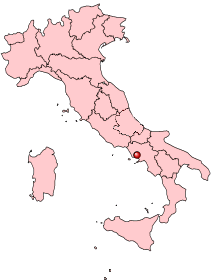
On Day 5, we took the train from Naples to Pompeii. Naples is a very dirty city and there was a long walk to the train station. When we got to Pompeii, we got off the train, got tickets and went in. Pompeii was a resort city for Rome, meaning that the Roman citizens had vacation homes there. Pompeii was destroyed in 79 A.D., when the nearby Mt. Vesuvius erupted. Pompeii was a very perverse city when it was destroyed. People would just throw their trash into the streets, so they made the fountains overflow to wash out the streets. Because of this there were sidewalks for pedestrians, and large stones were placed in the streets for people to cross the street, and the chariots could go over them. Like in Rome, there were temples to everyone they could think of.

The people in Pompeii probably did not know the destruction was coming. There had been some earthquakes, but there had been earthquakes before. They probably started that day like they would have started any other day. They ate and drank and were merry, not knowing that they would surely die.

We walked through the streets and looked at some of the buildings. Many of the houses were well preserved, and in some you could still see mosaics. Pompeii had it's own amphitheater, and a house where they trained the gladiators. It was very much like Rome because it was a Roman city. Here are some pictures:

The entrance to the city


Mount Vesuvius as seen from Pompeii


Me giving a talk on Pompeii


Pillars from the temple of Jupiter


Ancient Crosswalks


An original drain


Pillars from one of the temples


Daddy in Pompeii