Western Filming Trip

Fort Donelson lower battery
A few weeks ago we went on a filming trip for Discerning History to the Western Civil War Battlefields. We started out filming at Fort Donelson in Tennessee near the Kentucky border. It was one of the first battles won by U.S. Grant, and it was important as it forced back the Confederates and gave the Union control of the rivers. You can read more about it here on my Civil War blog.

Fort Donelson upper battery
Hotel near Fort Donelson where the surrender took place
After Fort Donelson we drove to Shiloh. In a huge battle there, more men were lost in one day than in all the previous American wars combined.You can read my posts about it here.
Sunset at the Hornet's Nest
Shiloh's Peach Orchard

Hornet's Nest
After Shiloh we filmed at Corinth, Mississippi and then drove over to Memphis, Tennessee. There we had a problem with the alternator in our Excursion. Thankfully, we were able to get to the Ford dealership and get a new one without losing too much time. That evening we drove down to Vicksburg, Mississippi. We filmed at the National Park there which contains the battlefield and earthworks. It was very impressive, and the bluffs between the lines were very high.
Rural Mississippi
The next day after finishing up some scenes along the Mississippi River we drove down to New Orleans and filmed b-roll there in the evening. We did not like it, it was one of the worst cities we have ever been to (including Rome.) The next morning we filmed at Fort Pike, just outside of New Orleans, and then drove back to North Carolina, stopping at Fort Gaines, Alabama, which guarded Mobile Bay.
New Orleans basilica
Sunrise at Fort Pike, Louisiana
Fort Gains, Alabama

Jackson's Valley Campaign

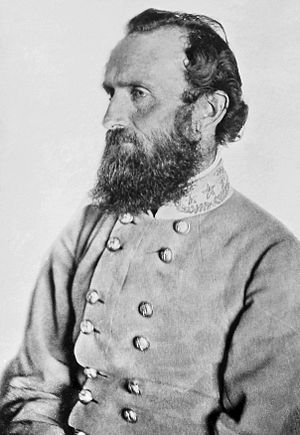
Gen. Thomas "Stonewall" Jackson
 Right now we are in the middle of the 150th Anniversary of Stonewall Jackson's famous Shenandoah Valley Campaign of the American Civil War. You can read about it in real time on my Civil War 150th Blog, You can also check out the tour we did of the campaign a few years ago, or read the posts we have written about it over the years.

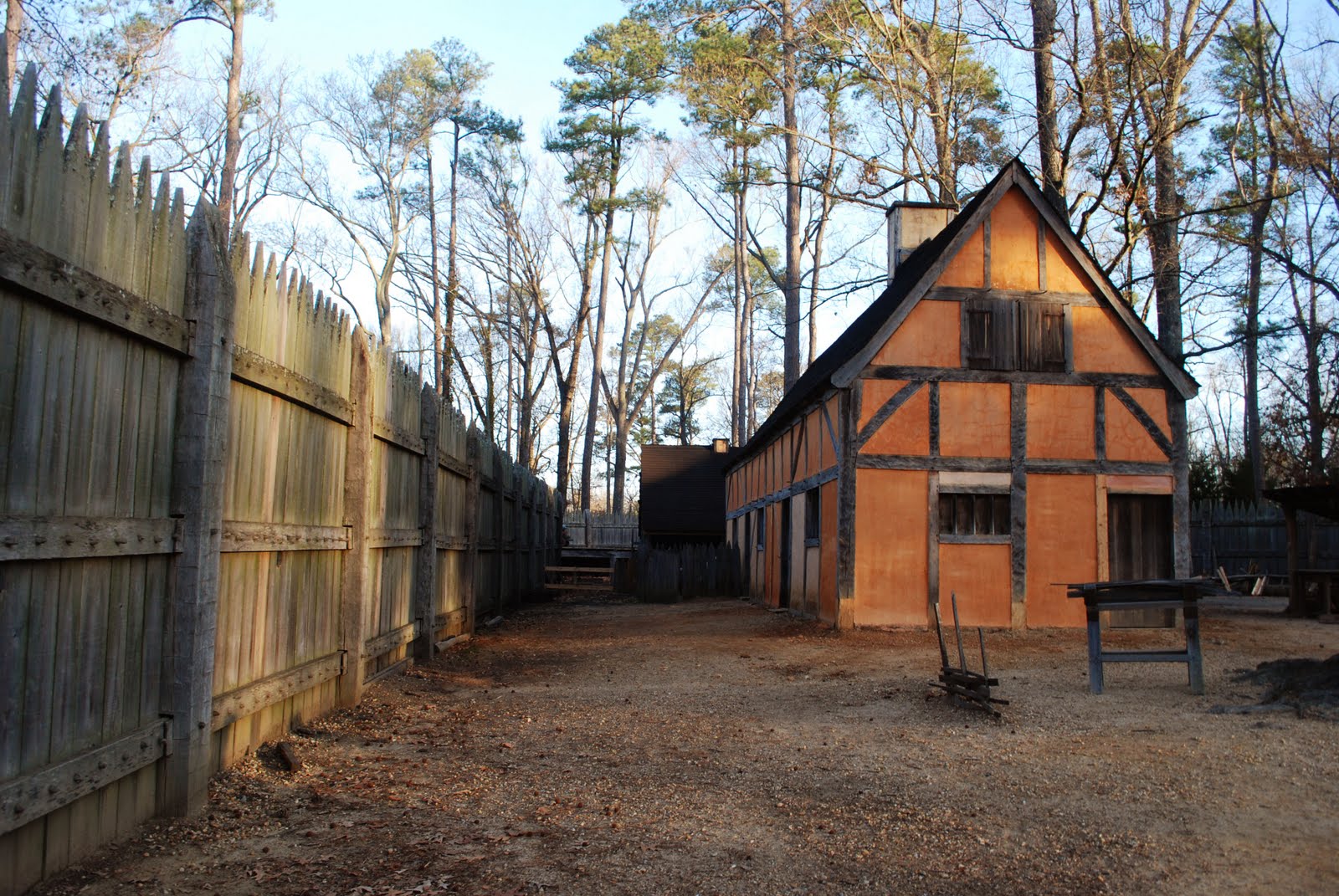
Filming at Jamestown

Panorama of Jamestown
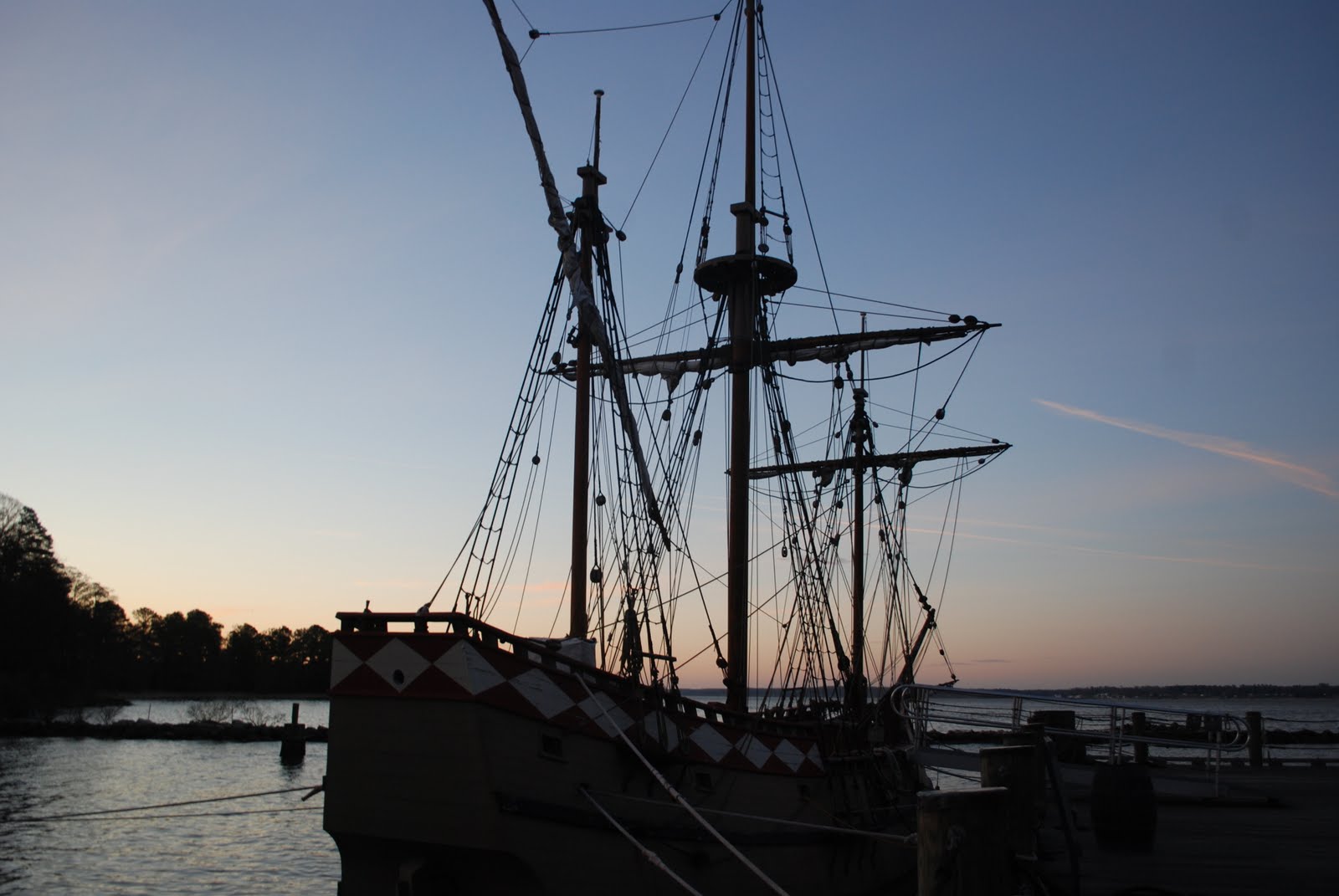
Last Monday we went to Jamestown, Virginia to finish up some filming for the video series. We filmed at Jamestown Settlement, a recreation of the original fort and town. It is right across the street from Historic Jamestown, which is the National Park containing the original site. The settlement is a really neat place. They have costumed reenactors there to explain the history. We filmed in the morning, doing a scene at the boats and three others at the fort. Here are some pictures


Setting up the jib
Sunrise over the ship


On the way back we stopped at a nice little country church. It was very old, and several presidents attended there, including George Washington, Theodore Roosevelt and John Tyler, whose house was very close by. During the Civil War services were stopped and it was used as a stable, but later it was reoccupied.

Add caption


Leadership Qualities of Jefferson Davis


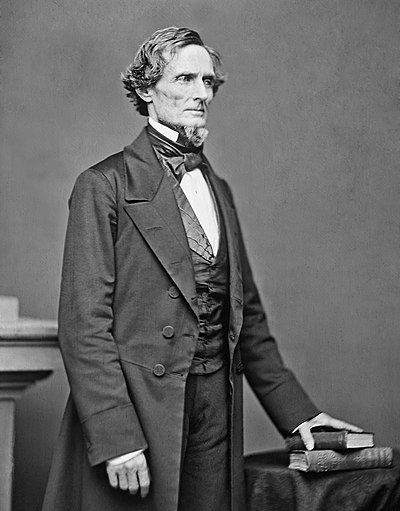
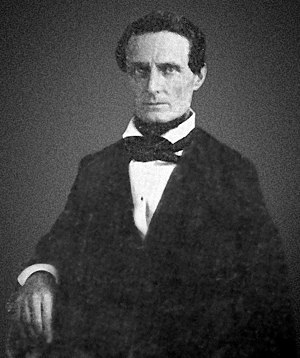
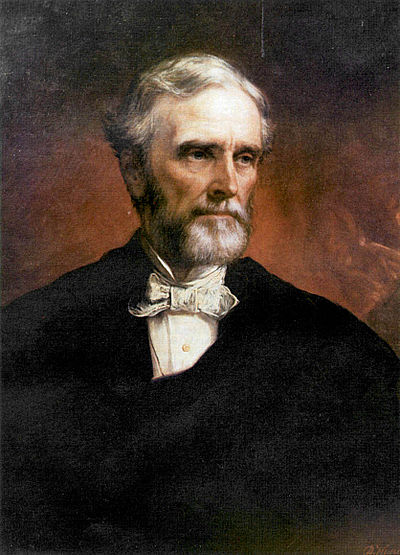
Jefferson Davis was one of the most influential American politicians in the 19th century. He was an important military figure, serving as Colonel of the Mississippi rifles in the Mexican War, and bringing in important military inventions as Secretary of State. He was the Southern leader in the Senate during the antebellum period. But his most important role came as President of the Confederate States of America, as he tried to lead a floundering new nation, guide her armies to victory and stave off defeat as along as possible. Although ultimately he was not successful, he was hailed as a hero by the South and loud cheers were given at the very mention of his name. During the war he had many enemies, but they almost unanimously rallied around him as a symbol of a political system and cultural structure that they had been forced to give up, but still cherished in their hearts. All this was possible because of four main qualities: trust in God, decisiveness, choice of men, and integrity.
Davis in about 1847

Trust in God

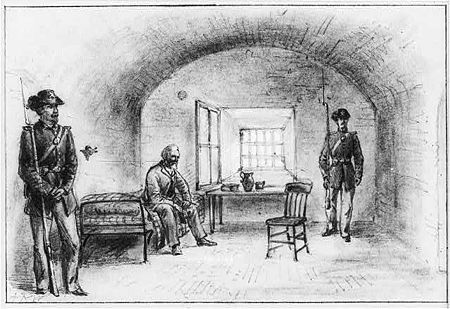
Throughout his life Jefferson Davis saw himself as a Christian, and attended church. But in 1862 as the Confederacy began to enter dark times, Davis turned to God even more. He was baptized in the Episcopal Church, publicly proclaiming himself to be a Christian. Jefferson Davis frequently in both public and private writings referred to God, and requested His help in their cause. As a prisoner Davis relied upon God and spent time reading the Bible and religious books. His doctor wrote:
There was no affection of devoutness of asceticism in my patient; but every opportunity I had of seeing him, convinced me more deeply of his sincere religious convictions. He was fond of referring to passages of Scripture, comparing text with text, dwelling on the divine beauty of the imagery, and the wonderful adaption of the whole to every conceivable phase and stage of human life. The Psalms were his favorite portion of the Word, and had always been. ... There were moments, while speaking on religious subjects, in which Mr. Davis impressed me more than any professor of Christianity I have ever heard. There was a vital earnestness in his discourse, a clear, almost passionate, grasp in his faith; and the thought would frequently recur, that a belief capable of consoling such sorrows as his, possessed, and thereby evidenced, a reality - a substance - which no sophistry of the infidel could discredit.1
Although today Robert E. Lee and Stonewall Jackson are typically thought of as the most Christian of the Confederate leaders, Jefferson Davis was a very devout Christian as well.
Davis in Prison

Decisiveness

As President of the Confederacy, Davis demonstrated decisiveness. He made mistakes, but he made them quickly. He was not rash, but he made up his mind quickly and worked to implement his decision. It is worse for a leader to be uncertain than wrong. If he was uncertain, Davis would never make a decision. Even if he leaned toward the correct solution, he would never have made up his mind and therefore would never have taken action on anything. Historian Joseph McElroy wrote:
It is doubtless true that it is more dangerous to a leader to be uncertain than to be wrong. The uncertain man confesses thereby the need to be led; and that other, when found, becomes the leader. Davis made many errors; but indecision was not among them, a fact which largely accounts for his continuing leadership, though it accounts also for many of his mistakes. As he was confident that his constitutional views were unassailable, so was he later confident with respect to his military views.2
Davis, 1853

Judge of Men

Davis had the ability to choose good men as his subordinates. Since he had been Secretary of War, Davis had some knowledge of the officers he would have available to him to choose from for leadership roles in the Confederate army. Unlike Lincoln, Davis did not give political appointments. Lincoln entered into his presidency with very little military knowledge, and he appointed politicians to commands for which they had no ability. Davis in general steered clear of these appointments, and although some were temporarily disappointed, it did well for the South in the long run. He wrote, “The appointing power is a public trust, to be executed for the public welfare, not a private fund with which to discharge personal obligations.”3 Instead of politicians, Davis instead appointed when possible men with military training who had experience which qualified them for their positions. He said, “If Napoleon, himself more highly endowed by nature with every military attribute than any other general of the Christian era, thought it essential to teach himself his business by incessant study, how much more is such study necessary for ordinary men.”4

Davis was strong in likes and dislikes. He was intensely loyal to his friends, and cool towards his enemies. But perhaps Davis's greatest service to the Confederacy was his relationship with Robert E. Lee. In the first year of the war Lee did not meet with the public's approval. He had a few military reverses, and no grand successes. But Davis trusted him and still had confidence in him. When the opportunity presented itself, Davis appointed him to the command of the Army of Northern Virginia. In this position he made history as one of the greatest generals in modern times. When he had reverses, Davis did not throw him away. He remained confident in him, thus probably extending the Confederacy's life for many months.
Davis 1885

Integrity

One of Jefferson Davis's greatest strengths was his integrity. When he swore to uphold the Constitution, he believed that he had to obey that oath. He believed it was his duty to strictly apply his interpretation of the Constitution. He wrote:
The Constitution and laws should be masters, and public officers, like private individuals, only their servants. Beyond the lines of their strict constitutional powers such officers are as literally without authority, before the law, as the humblest citizens; for they are, in fact, private wrong-doers, and not public officers, from the moment that they have transgressed those constitutional limits.5
He had no kind words for those who said there was a higher law that they could turn to to violate the Constitution:
You have among you politicians of a philosophic turn, who preach a high morality; a system of which they are the discoverers.... They say, it is true the Constitution dictates this, the Bible inculcates that, but there is a higher law than those and they call upon you to obey that higher law of which they are the inspired givers. Men who are traitors to the compact of their fathers – men who have perjured the oaths they have themselves taken – they who wish to steep their hands in the blood of their brothers; these are the moral law-givers who proclaim a higher law than the Bible, the Constitution, and the laws of the land. This higher-law doctrine … is the most convenient of which I have ever heard – for the criminal.... What security have you for your own safety if every man of vile temper, of low instincts, of base purpose, can find in his own heart a law higher than that which is the rule of society, the Constitution and the Bible?6
This stands in sharp contrast to the view of Abraham Lincoln. He thought that the preamble of the Constitution gave the guidelines towards which he was to act, and he was at liberty to break any specific injunction while doing it. One historian has written, “He was ready to violate any specific clause of the Constitution if by so doing he could serve its main purpose; and he interpreted his powers as including anything to save the Union.”7 Many Southern politicians of the Civil War eara have been criticized for using the state's rights issue only as a pragmatic argument in their pushing for or against slavery. But this criticism does not apply to Jefferson Davis. He believed in the State's Right doctrine with all his heart, and applied it throughout his life.

After the Confederacy was crushed, Davis was imprisoned, and although the government could find no crime for which to try him, he remained there for two years. His friends begged him to ask for pardon, since it was very likely it would have been granted, but he refused. He would rather suffer many trials than even hint that the principles for which the Confederacy fought were wrong. He said:
Nothing fills me with deeper sadness than to see a Southern man apologizing for the defense we made of our inheritance. Our cause was so just, so sacred, that had I known all that has come to pass, had I known what was to be inflicted upon me, all that my country was to suffer, all that our posterity was to endure, I would do it all over again.
Although the Confederacy had been defeated, Davis hoped that the principles for which they had fought would still live on. He said, “Truth crushed to the earth will rise again … in its might, clothed with all the majesty and the power that God gave it, and so the independence of these states, the Constitution, liberty, state sovereignty, which they won in '76... can never die....”8
Davis after the war


1. Jefferson Davis: ex-president of the Confederate States of America : A Memoir by Varina Davis (New York: Bedford Company, Publishers, 1890) vol. 2, p. 672-673
2. Jefferson Davis: The Unreal and the Real by Robert McElroy (New York: Smithmark Publishers, 1937) p. 312-313
3. Ibid, p. 314-315
4. Ibid, p. 315
5. Ibid, p. 310
6. Ibid, p. 187-188
7. Ibid, p. 311
8. Ibid, p. 678

Battle of Fort Donelson


150 years ago today the Battle of Fort Donelson began, a very important battle in the Civil War. You can read about it over the next few days on my civil war blog, civilwar150th.blogspot.com, where I walk through the Civil War as it happened, 150 year later. You can subscribe by RSS, or email.

Cruise to the Bahamas

A week ago today Dan and Kendra went kayaking in the Bahamas, where is was in the low 80's. We were on a cruise, without the children, to spend some time recreating, enjoying each other, and doing some planning for the coming year. Our last port was Great Stirrup Cay, Norwegian Cruise Line's private island. We were on an eco-tour, which means we got to see some sea creatures. The first was an iguana on the rocks we paddled next to.


One of our guides found this starfish, which they said was the largest they had ever found in this bay.

Whoso findeth a wife findeth a good thing, and obtaineth favour of the LORD. Proverbs 18:22 (KJV)
The next creature we got to experience is a sea cucumber, which Kendra passed on. Dan said it would alternate between feeling like a rotten cucumber and a wet stick. We walked on some beautiful beaches, ate well, and our favorite part was ordering room service for tea to drink on our private balcony while we sailed away each evening. The Lord truly blessed us with wonderful weather, and even more wonderful companionship.


Scott vs Amundsen: A Study in Polar Exploration

Two of the greatest expeditions in the history of Polar exploration was the race between Amundsen and Scott to reach the South Pole, 100 years ago during the winter of 1911/1912. Although there were similarities between these expeditions, there were also many fundamental differences.
Captain Robert Falcon Scott
Captain Robert Falcon Scott was an English navy officer and explorer. His first expedition was on the Discovery, which included setting a new point of the Farthest South ever reached by man. He returned on the Terra Nova in an attempt to reach the South Pole.
Roald Amundsen
Roald Amundsen was an explorer from Norway. While growing up he desired to become an explorer, and after participating in the first expedition to spend the winter in Antarctica, he led his own expedition to be the first to sail the Northwest Passage. While he was planning a journey to sail over the North Pole, the news was announced that two other explorers claimed to have already reached it. So he secretly changed his plans and sailed south to race Scott to be the first to reach the South Pole.

Similarities

1. Trust in God
Although it appears that neither Scott or Amundsen were Christians, both frequently mentioned in their writings the workings of Providence. Scott's men wrote saying they were willing to die if it was their time. Edward Wilson wrote, “[I]f the end comes to me here or hereabout … All will be as it is meant to be.” Henry Bowers wrote this to his mother just before dying next to Scott, “my trust is still in Him and in the abounding Grace of my Lord and Savior whom you brought me to trust in...” There is a saying that there are no atheists in foxholes, and there were no atheists in Antarctica either. When men are constantly faced with danger and death, they recognize their dependence on God, even if they do not follow Him fully.

2. Courage
Both men were very courageous, although in different ways. It took courage to even venture into Antarctica, far from hope of relief in case anything went wrong. When faced with hard decisions along his journey, Amundsen boldly took the hard course, not faltering or wasting time attempting to find an easier course. Scott, on his fateful journey, set an example of courage that the English would look up to for years. In one of his last letters he wrote, “We are showing that Englishmen can still die with a bold spirit, fighting it out to the end... I think this makes an example for Englishmen of the future.”
The Terra Nova

Differences

1. Motives
Amundsen explored because he loved exploration, but Scott explored because he wanted promotion. As a young man Amundsen heard of the stories of the explorers like Sir John Franklin and Fridtjof Nansen, and wished to follow their footsteps and become an explorer. Scott, a mediocre navy officer, heard of the planning of the Discovery expedition and saw it as a way to gain promotion and riches.
Nansen, Amundsen's hero and supporter
2. Preparation
The different motives of these two men resulted in vastly different methods of preparation. Amundsen gradually worked up to leading an expedition over a decade, first taking long ski trips in his native country of Norway, working on whaling ships which navigate the icy northern seas, and finally participating in someone else's expedition. Scott, on the other hand, was appointed directly to command a large expedition, and only spent a few weeks hearing about what Amundsen had learned first hand for years. On his Discovery expedition Scott admitted this, saying, "Our ignorance was deplorable."

Additionally, Amundsen spent many hours reading the works of previous explorers and analyzing everything to see what he could learn. Scott did not learn from his own experiences, much less those of others. He kept repeating the same mistakes over and over again. On previous journeys he had suffered from not bringing enough provisions, but he made the same mistake in this trip. In his ill fated expedition to reach the pole, he basically followed in the path of Shackleton, but he did not even bring a copy of Shackleton's book. He had to borrow one from another member of the expedition. Amundsen, on the other hand brought along a large polar library to study.

Scott's expedition to the South Pole had scientific aims as well, while Amundsen really did not, but this in no way excuses a lack of preparation.
One of Amundsen's dog sled teams
3. Technology
One of the biggest differences in Scott and Amundsen's journeys was the method of travel they used. Amundsen used dogsleds, while Scott used man hauling. Scott was biased against dog sleds because on the Discovery expedition they were a failure because no one knew how to use them. In the end, Scott did recognize that dog sleds were much quicker and more efficient, but he objected to them because at times the dogs had to be killed. So instead of killing a few dogs, he ended up killing himself because he could not reach his supply depots. He tried horses, but they were completely unsuited for the polar conditions, which he could have learned from the experiences of others. In England some, such as Scott's champion Sir Clements Markham, thought that it was more glorious to march without the assistance of dogs, saying, “People do not understand the greatness of [Scott's] achievement. The sledge journeys without dogs are quite unequalled. It is a very much easier matter when Peary or Nansen or Sverdrup make dogs drag their things, while they stroll along.”
Scott manhauling
The effort required to travel is demonstrated by two quotes. When Amundsen's party arrived, Bjalland, one of the best skiers in the world, wrote, “the skiing was brilliant.” When Scott arrived he said, “Great – God this is an awful place and terrible enough for us to have laboured to it without the reward of priority…Now for the run home and a desperate struggle to get the news through first. I wonder if we can do it.”
Amundsen carefully laying a depot
4. Planning
Amundsen made detailed plans far in advance of setting out on the journey, giving himself plenty of extra provisions in case he hit bad weather. Scott made complicated, last minute plans, making many mistakes in small details that cost him much time and labor. For example, an important element of both of their plans was to leave supply depots on the journey to the South Pole which they would pick up on the way back. Amundsen, having read of other men having problems finding the depots they had left, put markers to the left and right of his depots, giving himself a several mile range to hit. He also built markers at intervals along his route so he could always see one, so he would not have trouble following his tracks. Scott, on the other hand, built only depots, making the same mistake that others had before him, wasting time and effort.

Scott's worst mistake in planning was his provisions. He made allowance for only four days of bad weather in a four month journey, an amount which the journals of previous explorers would have told him was far too low. He ended up dying because of lack of supplies because he hit a blizzard. He was only eleven miles from the next supply depot. Nansen, an explorer himself and Amundsen's mentor, said, “Let no one come and prate about luck. Amundsen's triumph is that of the strong and far seeing.”
One of Scott's depots
5. Leadership
The two men had very different leadership styles. Scott was a naval officer, and a mediocre one at that. He led by enforcing the fact that his word was law, being secretive about his plans, and refusing to listen to suggestions from others. Amundsen, although it was still very clear that he was the leader, was open about his plans, allowed suggestions to be made, intermingled with the men, and shared the worst chores with them. However, both men did have good leadership qualities and both made leadership mistakes.
Amundsen's party at the Pole
6. Popularity
Amundsen ended up reaching the pole first, and returning successfully, with little suffering besides. But when he returned to Europe he was quickly forgotten in favor of Scott, who had died after losing the race to the pole. Although Amundsen was a better explorer, Scott was a better writer. Amundsen's stories did not have the drama which Scott was able to convey. One historian said, “Amundsen had made the conquest of the Pole into something between an art and a sport. Scott had turned Polar exploration into an affair of heroism for heroism's sake.” Scott's popularity in England was much helped by the fact that he did not come back. He had been defeated by Amundsen, and England preferred a dead lion to a live donkey. Even today, Scott remains much more popular than Amundsen, remaining for many the iconic British hero.
Scott finding he had been beaten by Amundsen

Sound Doctrine Conference

A few weeks ago NCFIC had a week long Sound Doctrine Conference which we went to. It was an intense study of the Second London Baptism Confession, the doctrinal statement used by our church. Doctrine is important because it defines the way we view all of life. My father was one of the speakers. It was a really good conference, and many people said it was the best they had ever been to. I would recommend getting the audio when it comes out. Here are some pictures.
Listening to Messages
My father speaking
My father speaking
Most of the speakers of the Conference

70th Anniversary of the Attack on Pearl Harbor

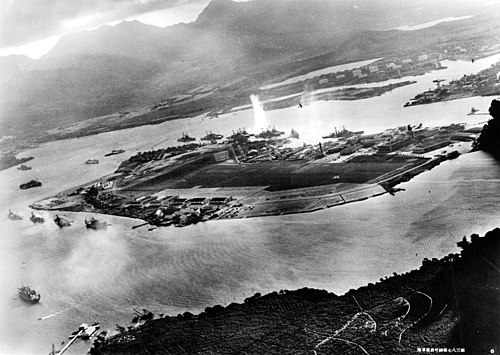
Pearl Harbor before the attack
70 years ago today the Japanese attacked the United States fleet at Pearl Harbor, plunging United States into World War II. President Obama said this in a proclamation yesterday:
On National Pearl Harbor Remembrance Day, we honor the more than 3,500 Americans killed or wounded during that deadly attack and pay tribute to the heroes whose courage ensured our Nation would recover from this vicious blow. Their tenacity helped define the Greatest Generation and their valor fortified all who served during World War II. As a Nation, we look to December 7, 1941, to draw strength from the example set by these patriots and to honor all who have sacrificed for our freedoms.
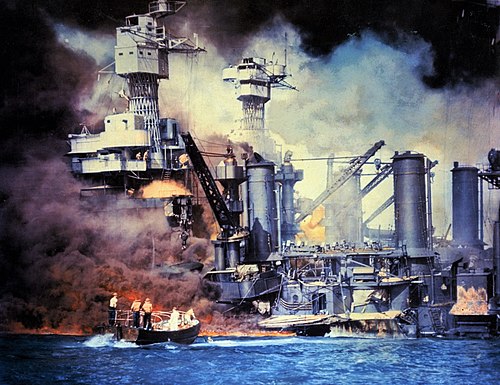
West Virginia sinking
The attack on Pearl Harbor was a major mistake for the Axis. I wrote this in a post about the Mistakes of World War II a few years ago:


Hitler’s policy before and during WW2 was “one at a time.” He would only attack one nation at a time, thus preventing other nations from banding together with them. In this way he was able to easily defeat nations that would have been much more difficult if they had been able to band together. This was what he did to the United States. Eventually he would have attacked them, but he did not want to declare war on them until he had defeated the British Empire and the Soviet Union. Since the US Constitution requires that the President get the Congress to declare war, President Roosevelt was not able to get the Congress to declare war on the Axis until they were actually attacked. Even though they were supposed to be neutral, the USA still helped the British massively by giving them huge amounts of munitions. Germany, however, just ignored this because they did not want to fight the United States until they were done with Britain and the Soviet Union. As Churchill said, “[Hitler] always dreaded the consequences of war with the United States, and insisted that German forces should avoid provocative action.”2

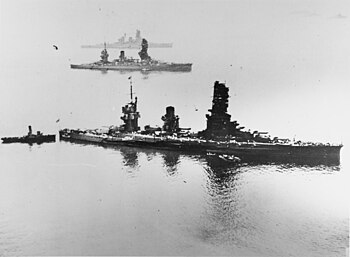
Japanese battleships

But then in 1941 Japan decided that the Axis was going to win the war, so they wanted to join on their side. Japan’s targets were the eastern holdings of Britain, the Netherlands and also the United States. Japan decided that it needed to strike the United States pacific fleet stationed in Pearl Harbor so that they would not be able to resist Japanese conquests. They wrongly thought that if they attacked Britain’s colonies in the east the American fleet would attack them. This would probably not have happened. Hitler disagreed with Japan’s decision to attack the US. He thought that they should first attack and capture the British and Dutch colonies, then attack the United States. “[Germany] urged the Japanese Government to strike without delay at Malaya and Singapore and not to bother about the United States. Hitler had already enough on his shoulders without drawing them in.”3 Winston Churchill, the leader of the English Empire said, “My deepest fear was that the Japanese would attack us or the Dutch, and that constitutional difficulties would prevent the United States from declaring war.”4

Compared to the United States, Japan was nothing. Bringing in Japan on their side and the United States on the other would hurt the Axis greatly. Japan was temporarily in a better position because they were ready for war and closer to where the battles would be fought, but ultimately their strength was not even close to America’s. Churchill said this before Japan attacked,


Viewing the vast, sombre scene as dispassionately as possible, it would seem a very hazardous adventure for the Japanese people to plunge quite needlessly into a world struggle in which they may well find themselves opposed in the Pacific by States whose populations comprise nearly three-quarters of the human race. If steel is the basic foundation of modern war, it would be rather dangerous for a Power like Japan, whose steel production is only about seven million tons a year, to provoke quite gratuitously a struggle with the United states, whose steel production is now about ninety millions; and this would take no account of the powerful contribution which the British Empire can make.5

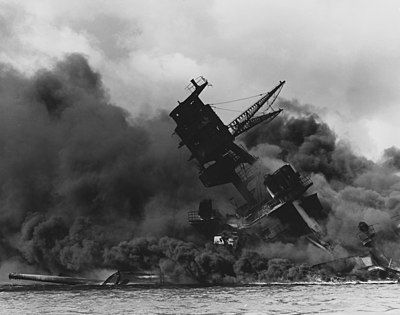
The Japanese did not listen to Hitler, and continued to prepare their attack on Pearl Harbor. They struck without warning on December 7th, 1941. Their attack was mostly successful. Four American battleships were sunk, the other four were disabled. Almost 200 aircraft were destroyed, and 150 more damaged. But even though America’s navy was severally damaged, it still had many more resources than the Japanese. After the attack Germany, Japan and Italy declared war on the United States; Britain declared war on Japan and the United States declared war on Japan, Germany and Italy.

Japanese Planes attack Pearl Harbor
When Churchill heard of the attack on Pearl Harbor he was actually glad. He wrote this later,
[N]ow at this very moment I knew the United States was in the war, up to the neck and in to the death. So we had won after all! … We had won the war. England would live; Britain would live; the Commonwealth of Nations and the Empire would live. How long the war would last or in what fashion it would end no man could tell, nor did I at this moment care. … Hitler’s fate was sealed. Mussolini’s fate was sealed. As for the Japanese, they would be ground to powder. All the rest was merely the proper application of overwhelming force. The British Empire, the Soviet Union, and now the United States, … were, according to my lights, twice or even thrice the force of their antagonists. No doubt it would take a long time. … [B]ut all this would be merely a passing phase. United we could subdue everybody else in the world. May disasters, immeasurable cost and tribulation lay ahead, but there was no more doubt about the end.6
Winston Churchill turned out to be correct. The Axis was not able to defeat the combined strength of the United States, Great Britain and the Soviet Union. Japan’s attack on the United States combined with Germany’s failed attack on Russia destroyed the Axis’ chances for final victory.

USS Arizona burns after the Japanese attack on Pearl Harbor 
Churchill, Winston. The Second World War. (London: Cassell & Co. Ltd 1948) volume 3, p. 126
3 Ibid, p. 1604 Ibid, p. 5345 Ibid, p. 528-5296 Ibid, p. 539-540

Interview with Dr. Dilorenzo

Yesterday we drove up to Maryland for an interview with Thomas Dilorenzo, an economics professor and historian for our video series, Discerning History. He wrote the Real Lincoln, a very interesting book on whether Lincoln was actually the great man that almost everyone sees him as today. We interviewed him on the economics and states rights issues leading up to the Civil War.

South Carolina Filming Day 3

Early Morning on a Charleston Street
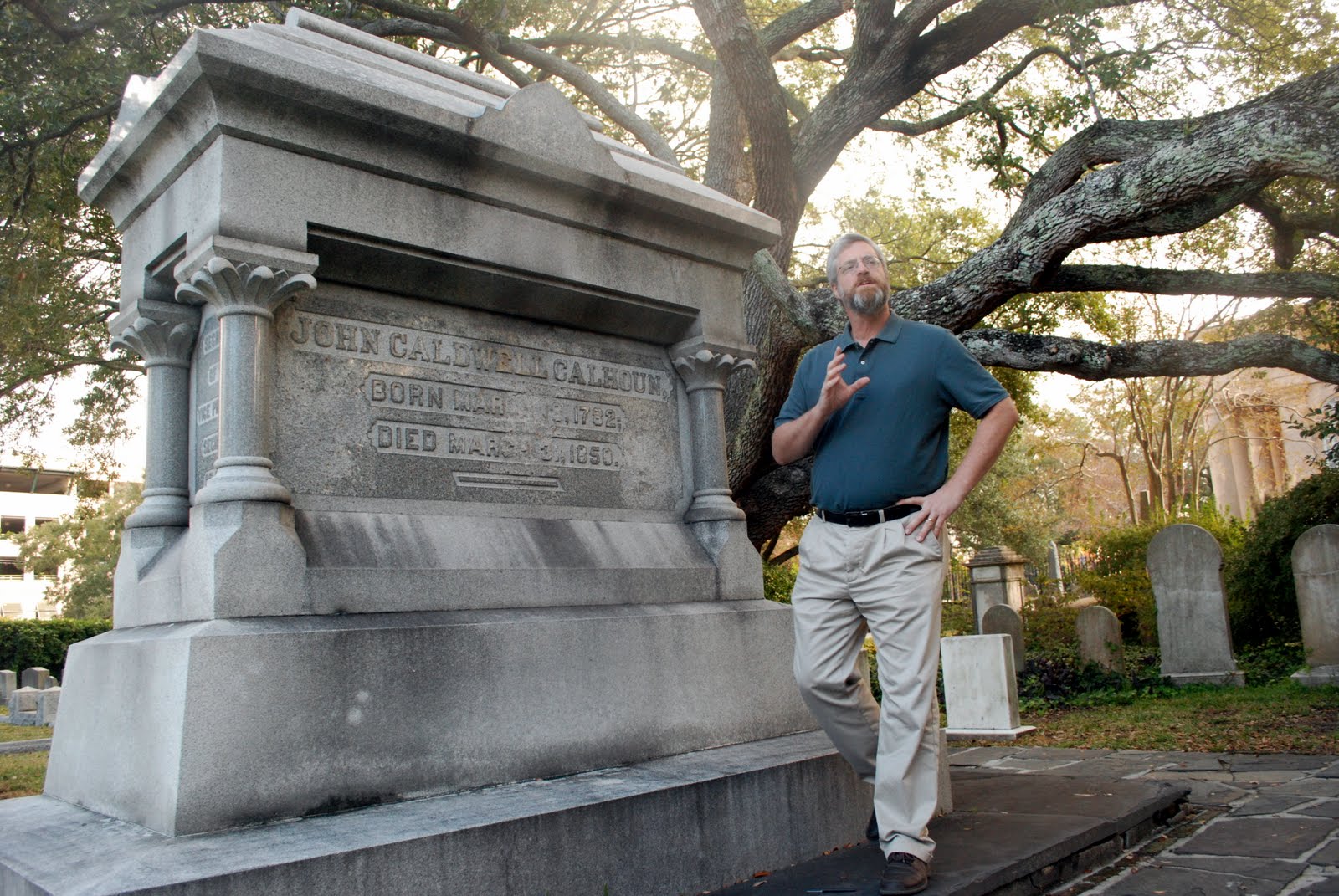
On Friday we got up early to film at the Old Exchange and Provost building, which was used as the custom house in Charleston. From there we moved on to St. Philips Church, were we visited the grave of John C. Calhoun, a very important politician from South Carolina. We filmed at the Old Slave Mart where the slaves were auctioned for a few years. We got through these scenes so quickly we were able to move on to the ones I had planned for the next day at Fort Moultrie. 
St. Phillips
Calhoun's grave


Me running the teleprompter
Carrying equipment

Stephen Breagy